Is it a Cyberdeck? Not quite
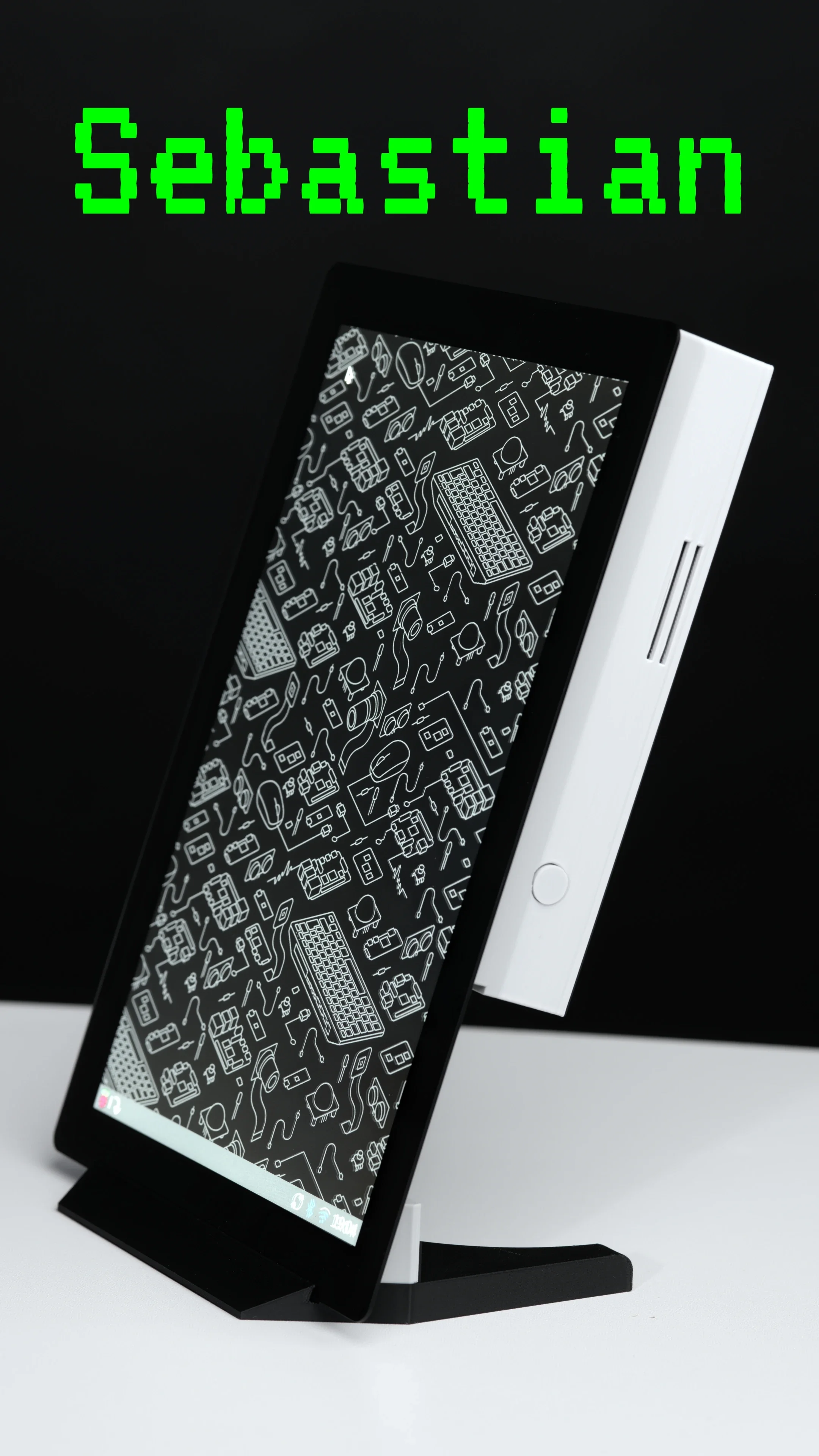
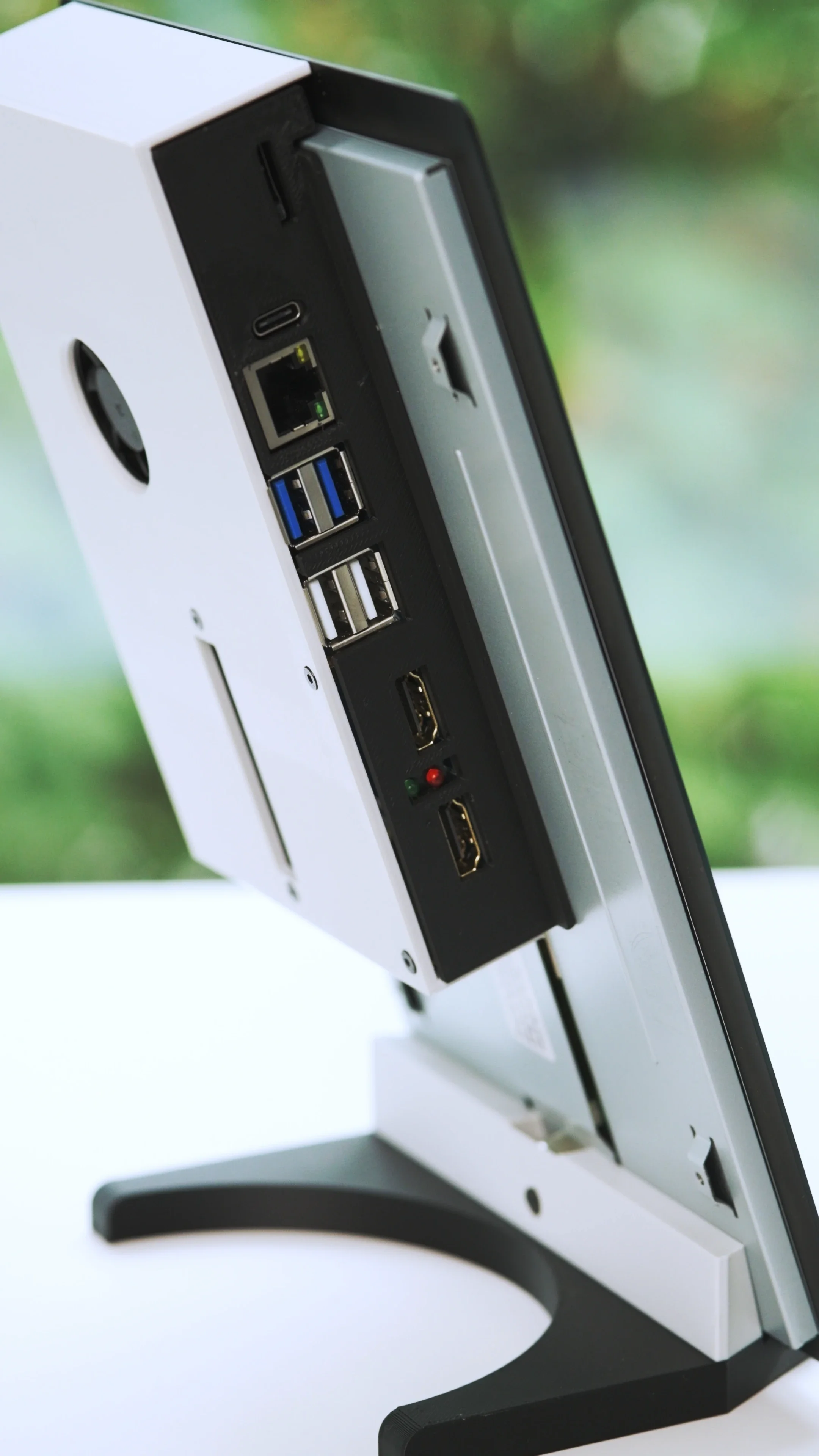
tl;dr: Sebastian is a Raspberry Pi CM5 behind a ten inch touchscreen. Standalone it's a cyberdeck. Plug in a monitor and a keyboard and it's a workstation. Same computer, same operating system, nothing else changed. The argument about what cyberdeck means is unwinnable, so we don't play. Everything you need to make your own is on GitHub.
Someone always asks. You post a photo of a Pi bolted to a screen and the first comment is a definition problem. Is that a cyberdeck? Is it a handheld? Is it just a tablet with worse battery life?
We made this one and I still can't answer it. The answer changes depending on which room it happens to be in.
Nothing else changed
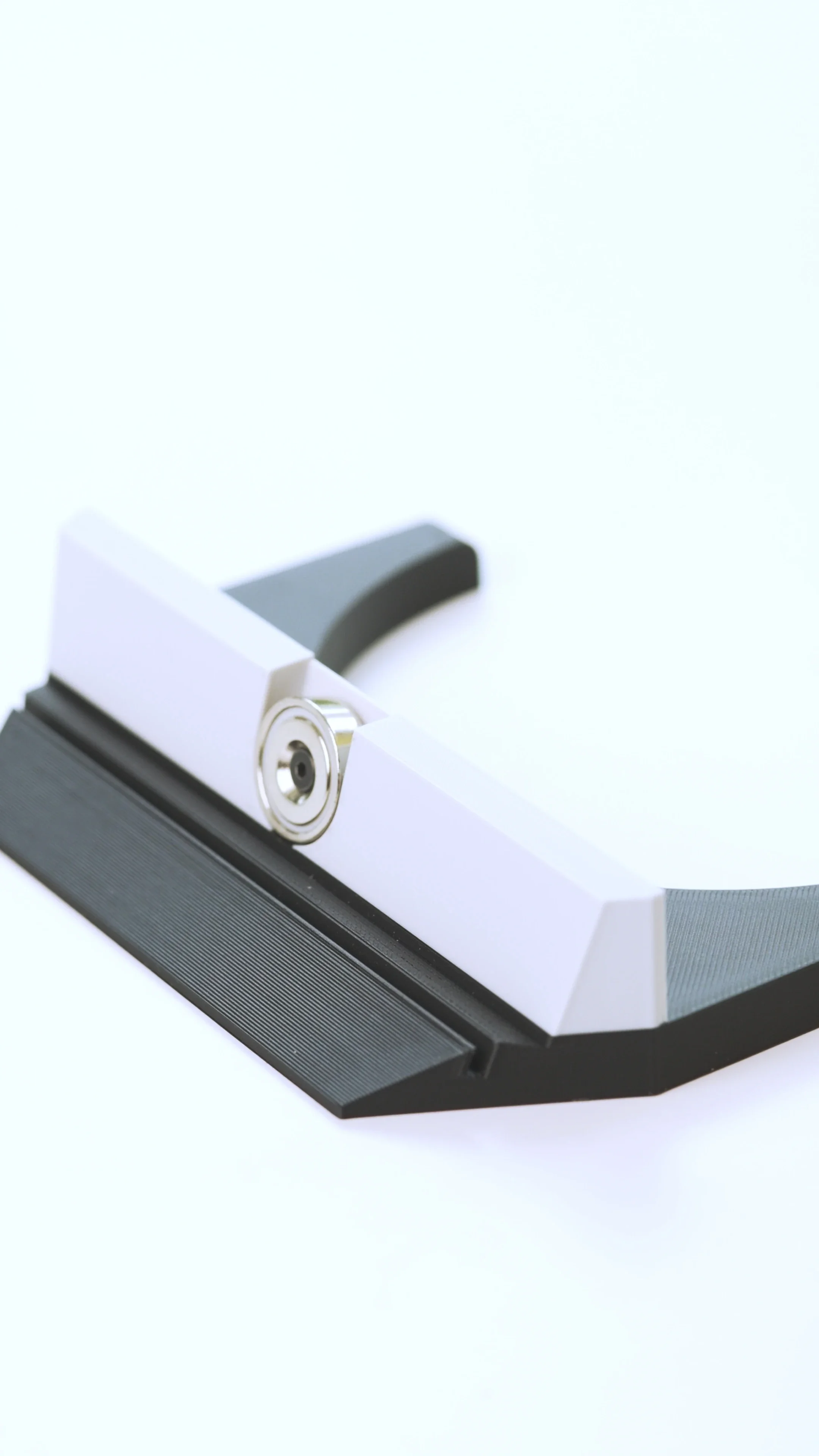
Standalone, it's a cyberdeck. Ten inch touchscreen, landscape or portrait as you like, no keyboard, no mouse, sat in its stand on the bench. You pick it up and a magnet in the stand keeps the two of them together, a detail I enjoy more than I should. Everything you do, you do by poking the glass.
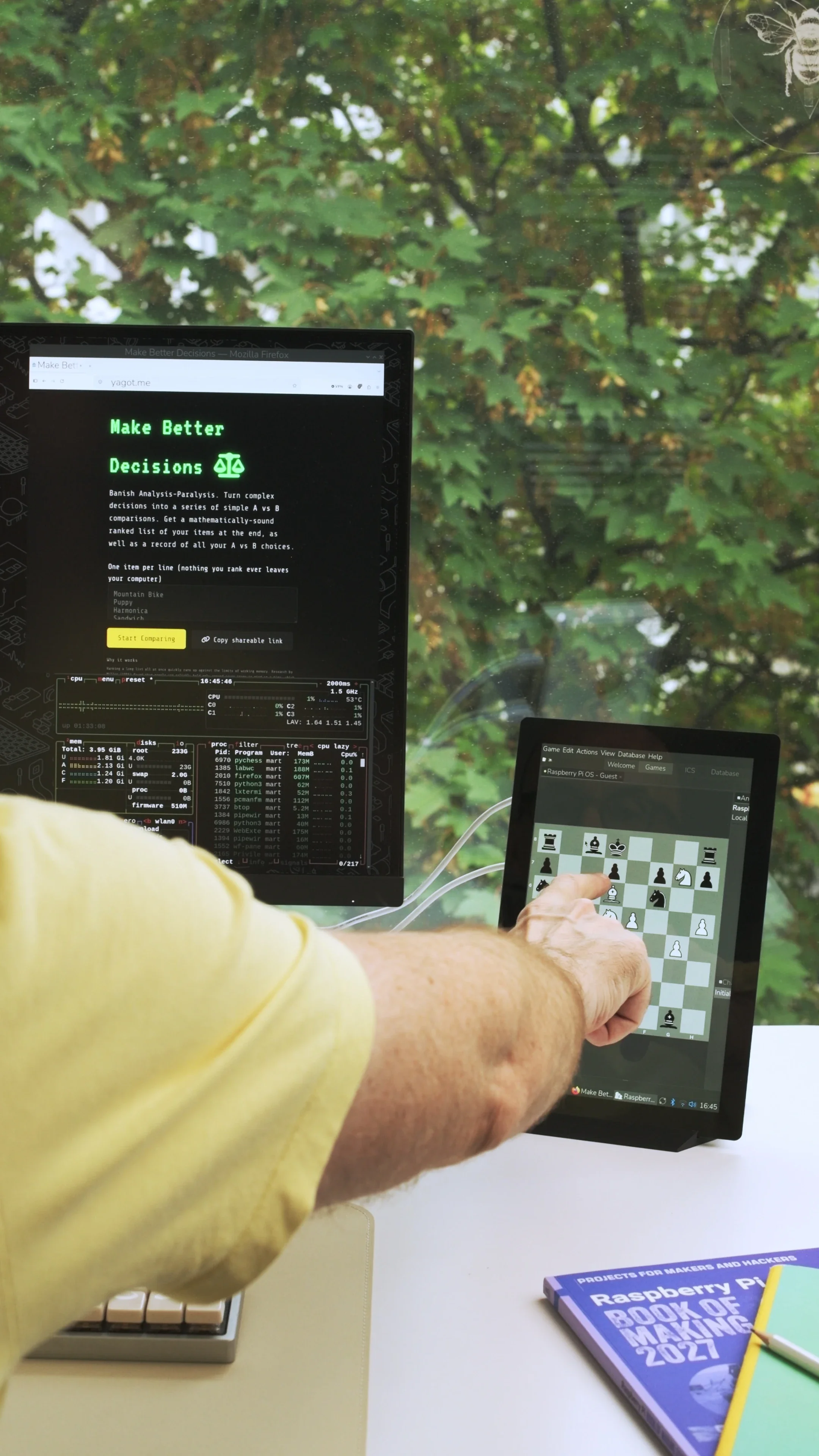
Plug in a monitor and a keyboard and it's a workstation. The touchscreen becomes a second display, tall and narrow, with something useful on it. Same computer, same operating system, same stand. The only thing that changed is what's in the back of it.
There is one button on the taskbar that isn't standard, and it toggles the screen between portrait and landscape. It is the only software change on the whole machine. It doesn't decide what the machine is, though. A cable does that.
Nobody has ever built a real cyberdeck
The definition argument is unwinnable, and somebody on Reddit recently did a proper job of explaining why. Go back to the source and a cyberdeck is the thing Case owns in Neuromancer: hardware that jacks into your nervous system and drops your consciousness into a shared hallucination. By that standard nobody has ever built one, including everyone currently arguing about it. And the awkward detail for the scavenged-parts purists is that Case's deck was a brand name product, bought in a shop, that he neither built nor modified. The home-brew ethic is a rebellion against the book it claims as scripture.
That Reddit post lands in the right place. Words mean what people use them to mean, not what a novel from 1984 licensed. Nobody gets upset that "robot" now covers a Roomba. In current use, cyberdeck means a homemade portable computer assembled from parts, usually with the wiring showing. That's the living definition, and it's no less real for having drifted.
Two kinds of cyberdeck
That definition covers two quite different kinds of build, and we've made both.
The first is putting a single board computer inside something that looks good, photographing it, and saying retro-futuristic. We have absolutely done this. The anti-algorithm bagel is an example of this, so we hardly have the moral high ground.
The second is a machine that ends up in the rotation and does actual work. That's harder, and it's mostly a software problem rather than a printing one. There's no mouse on this thing in either mode, and the screen is small, which is exactly the situation we wrote The Best Mouse is no Mouse about: Neovim, Neomutt, Tmux, and a set of cheat sheets so you can keep your hands where they are.
A beautiful build you can't work on is an ornament. That's the only line we bother policing, and we police it on ourselves. Sebastian passes because I use it, in both modes, most days.
So call it whatever you like. Cyberdeck implies a look: exposed boards, a handle, a mechanical keyboard glued to something it shouldn't be glued to. Workstation implies a desk and a chair. Neither describes what a computer does. They describe where it lives, and this one lives in two places.
Why Sebastian?
It's named Sebastian, after the man in Blade Runner who built things to keep himself company. If you watch to the end of the video, there's a famous chess game on the touchscreen. It's a real game, and an old one. That's for him.
Build one
We've shared all the parts you need to make one. It's all on GitHub. The STLs, the FreeCAD source so you can change the stand rather than just print mine, the rotation script, the panel config, and step by step setup from flashing the card to moving the OS onto the NVME. MIT licensed. Nothing to buy from us.
So build one. Change the bits you don't like, make the stand fit your desk, pick different parts. If you end up with something better than ours, send a pull request or just tell us what you'd have done differently. That's the whole point of putting it up there.
Video below.