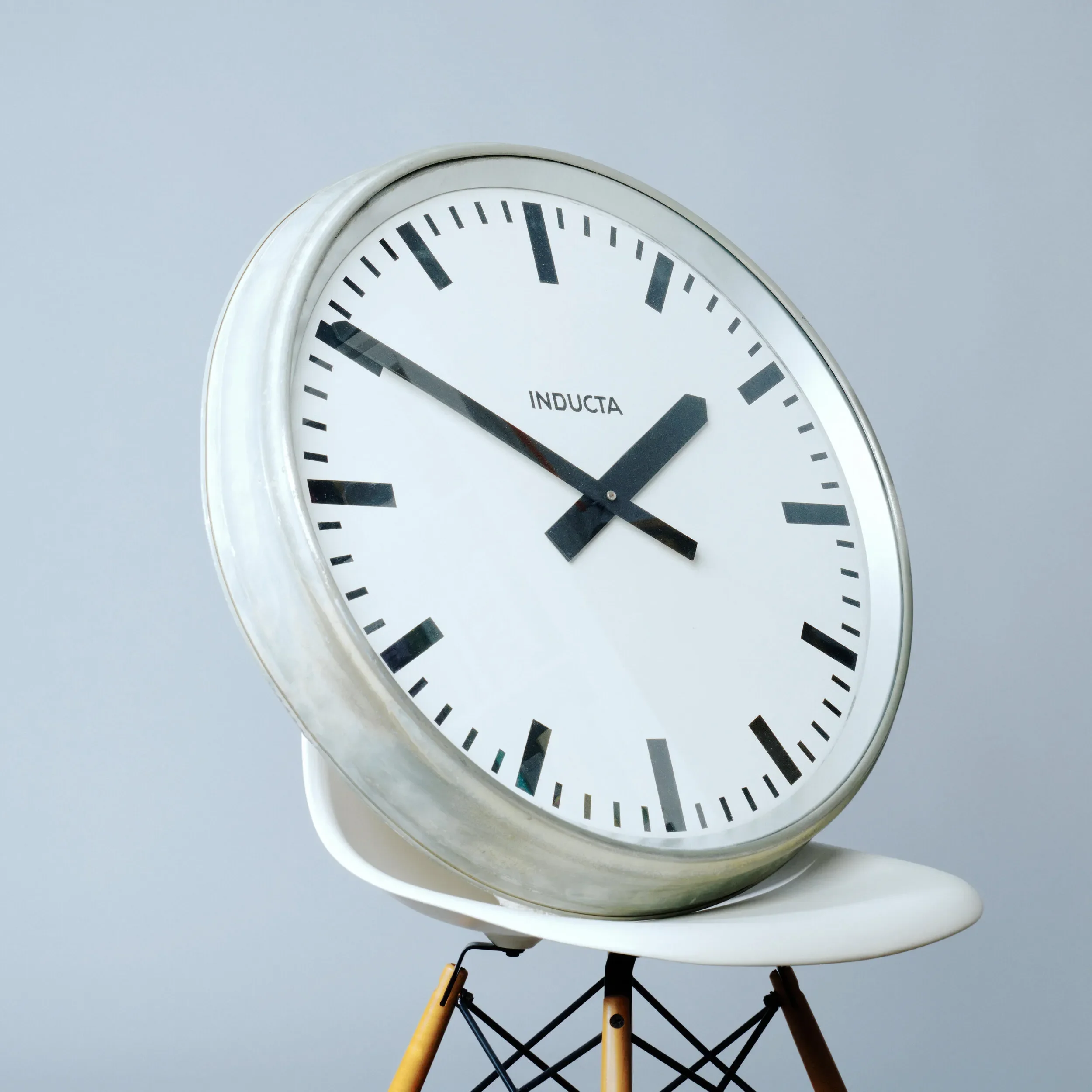
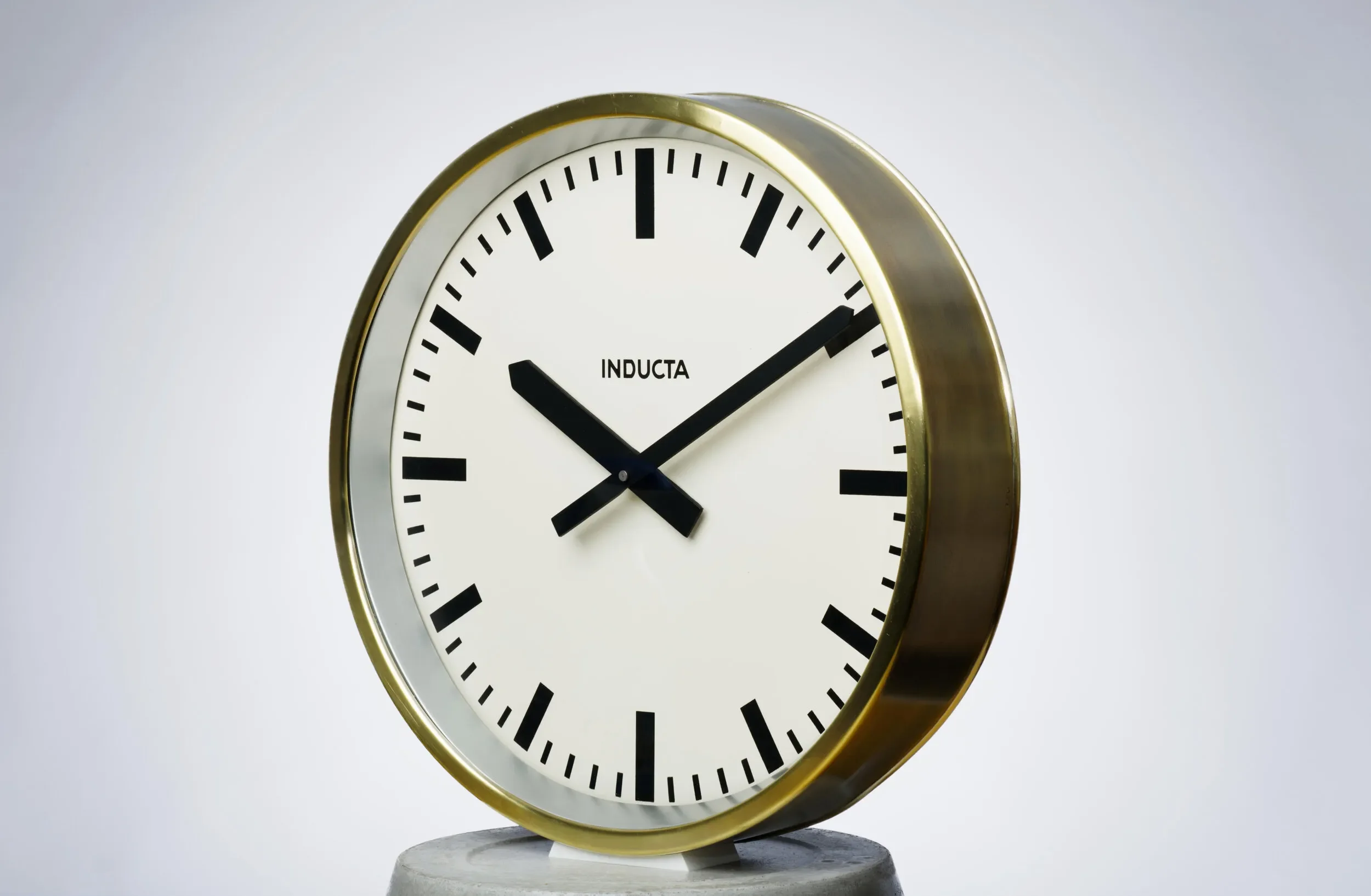
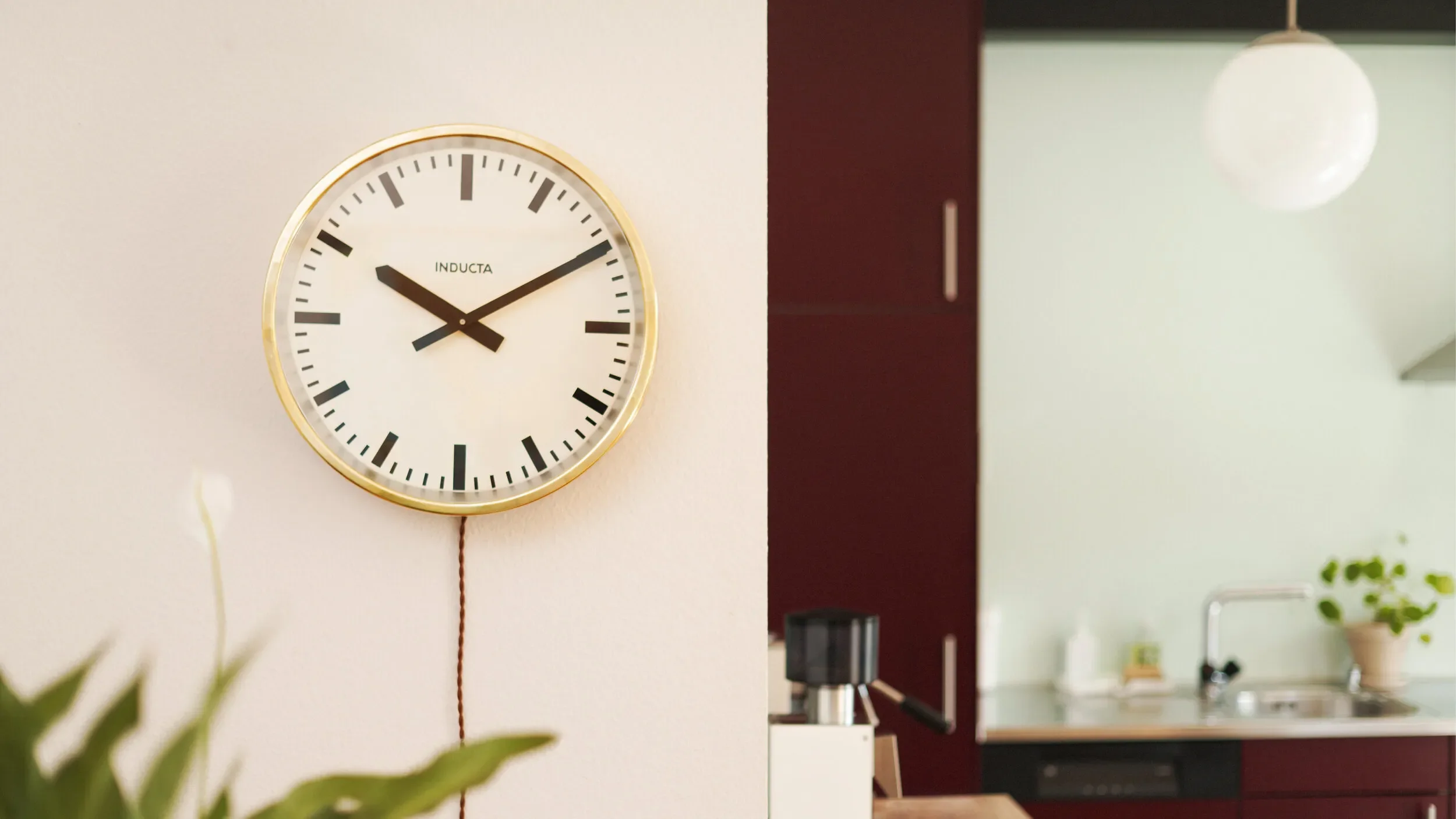
 Image 1 of 5
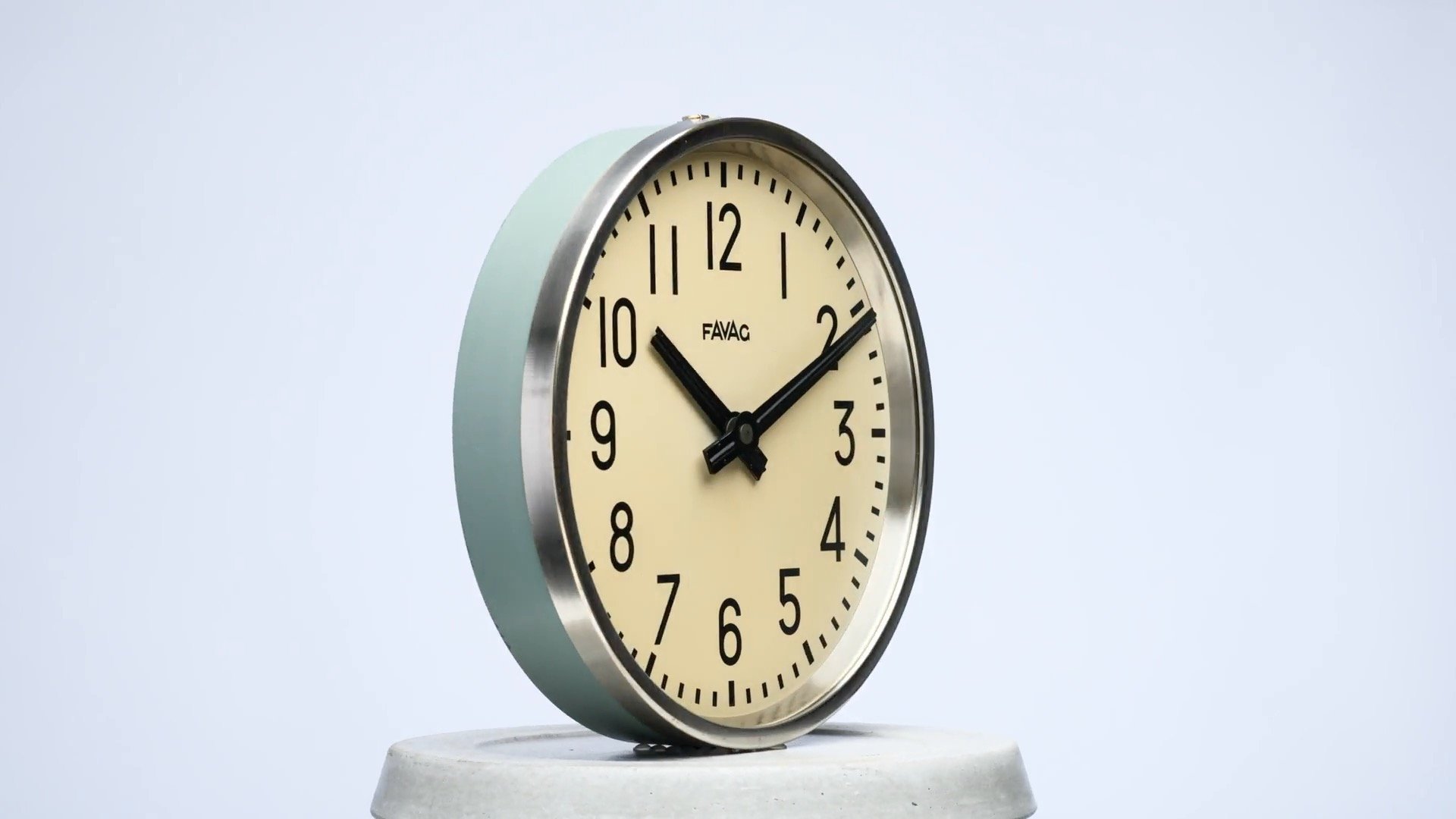 Image 2 of 5
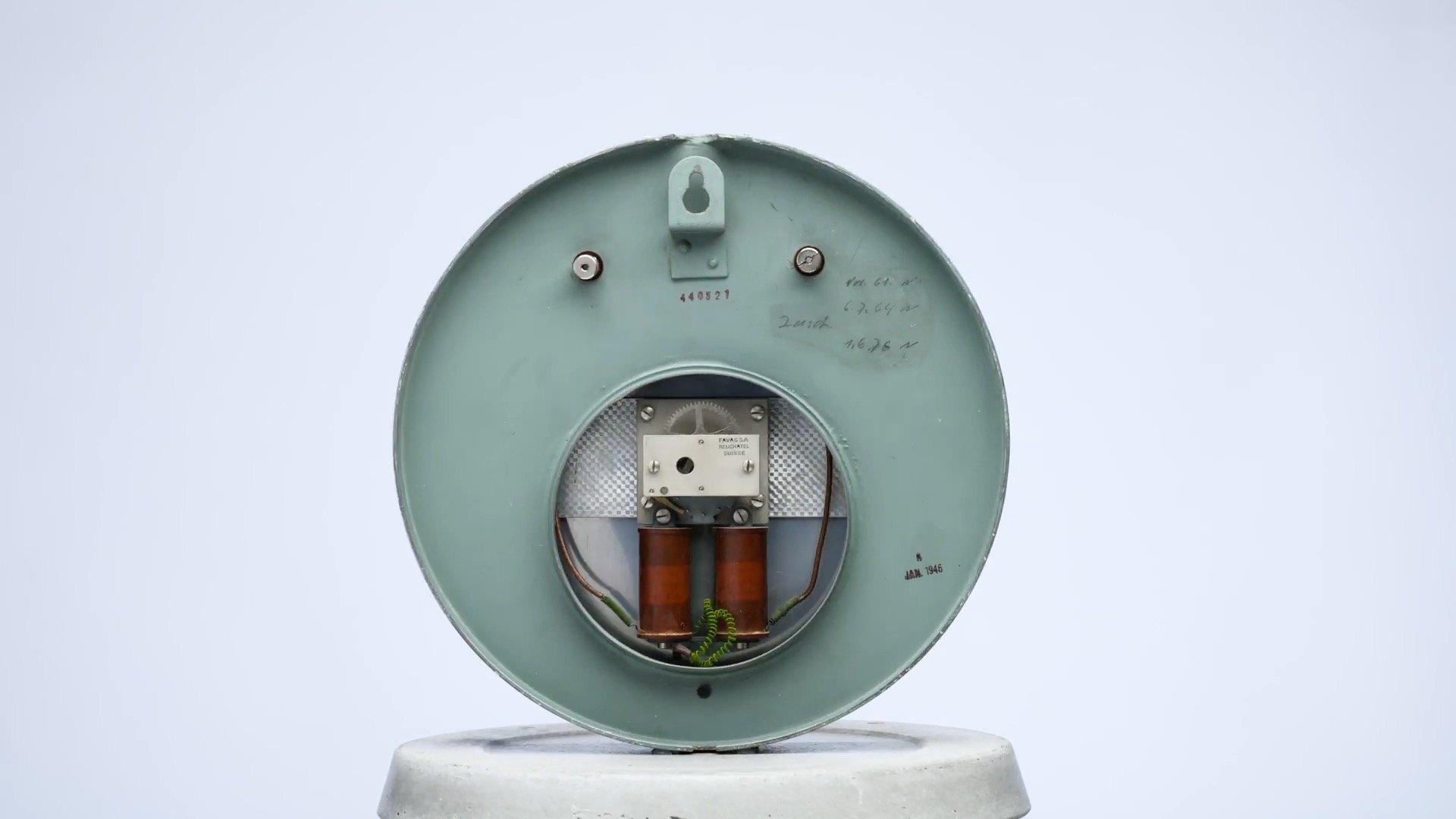 Image 3 of 5
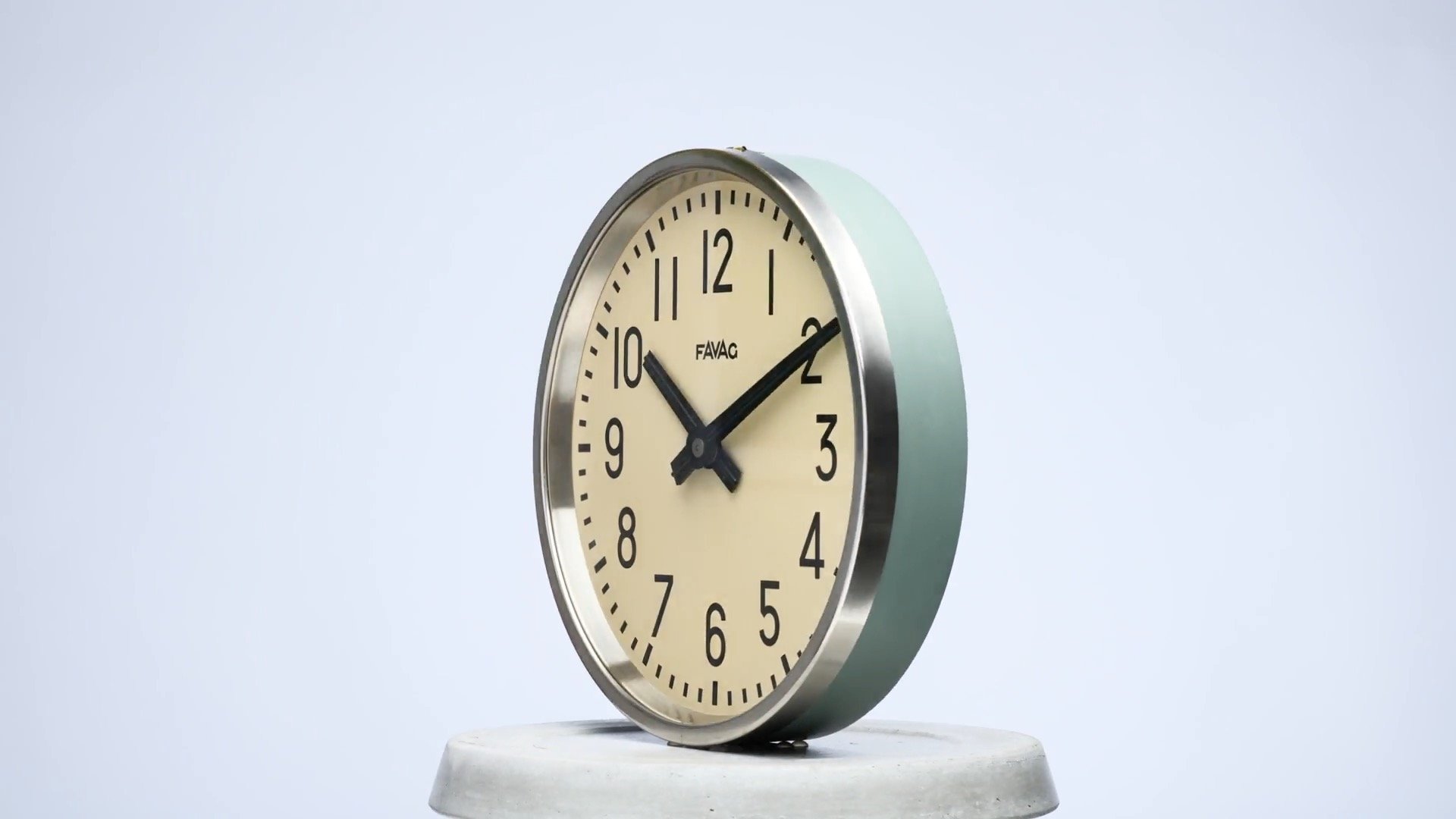 Image 4 of 5
 Image 5 of 5
Who Made The Clock?
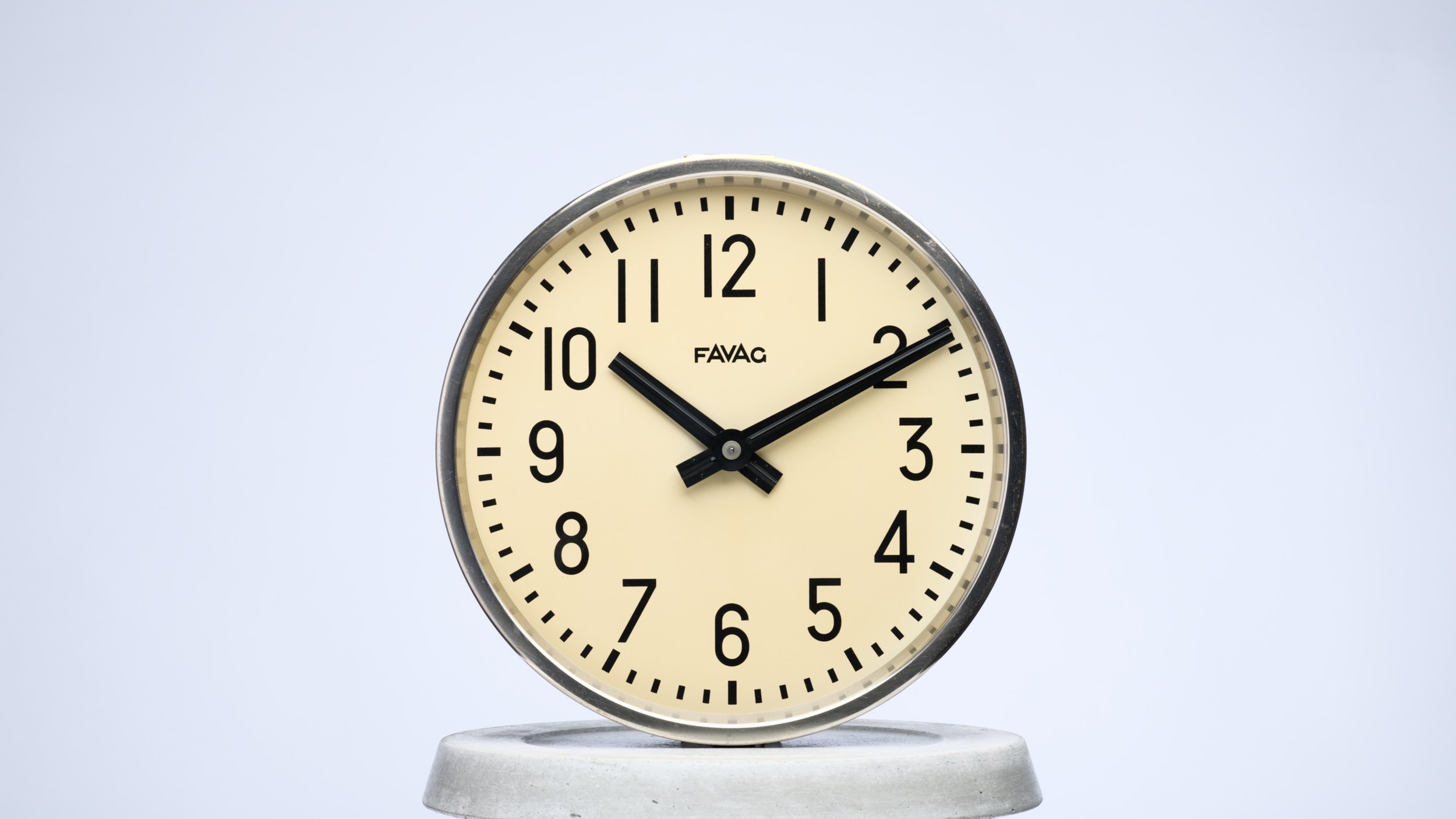
FAVAG, Switzerland
A Timeline of FAVAG
-
Mobatime 2002Bosshard Company is renamed Mobatime.
-
Moser-Baer 1989Ascom FAVAG is sold to Bosshard (Moser-Baer) Company.
-
Ascom Favag 1983After a merger between Hasler and Autophon, FAVAG SA is renamed Ascom FAVAG.
-
Favag AG 1927Forms an alliance with Hasler SA, resulting in the creation of FAVAG SA.
-
Favarger & Cie 1908Company transitions to Favarger & Cie through a limited partnership.
-
Peyer & Favarger, Succ. de M. Hipp 1889At the age of 75, Hipp retires and transfers management to engineers Albert Favarger and A. De Peyer, resulting in the renaming of the company to Peyer & Favarger, Succ. de M. Hipp.
-
Minute Jumpers 1869Hipp patents a system of impulses for slave clocks, known as 'minute jumpers’, a system that electric clocks use to make sure all clocks show the same time by adjusting them at the start of each minute.
-
Electric Clocks installed in Geneva 1862Hipp pioneers the installation of the first electric clock system in Geneva, initiating a movement that sees electric clocks steadily spreading across Europe.
-
Fabrique des télégraphes M.Hipp 1860Hipp applies the Hipp-toggle system to an electro-magnetic clock, drawing upon Alexander Bain's innovation, and establishes Fabrique des télégraphes M.Hipp in Neuchâtel, Switzerland marking the start of his own company. Over the next four decades, Hipp brings more than 20 inventions to technical maturity.
-
Swiss Goverment 1852Matthäus is appointed director of the national telegraph workshop by the Swiss government in Bern, Switzerland
-
Matthäus Hipp 1843Renowned as the 'Swiss Edison,' Hipp introduces the 'Hipp-toggle' mechanism, designed to regulate and maintain the motion of a clock's pendulum in a mechanical clock at an exhibition in Berlin.