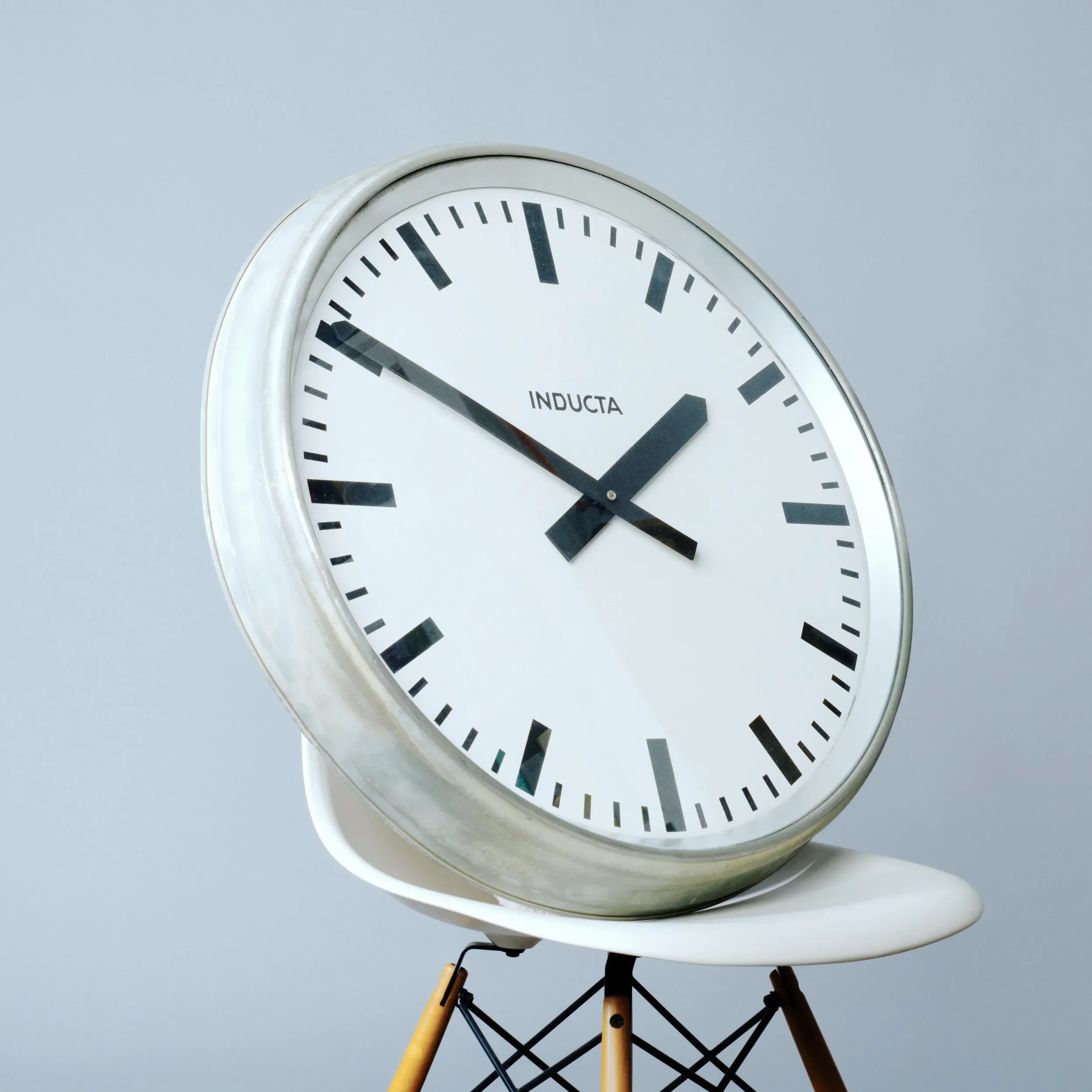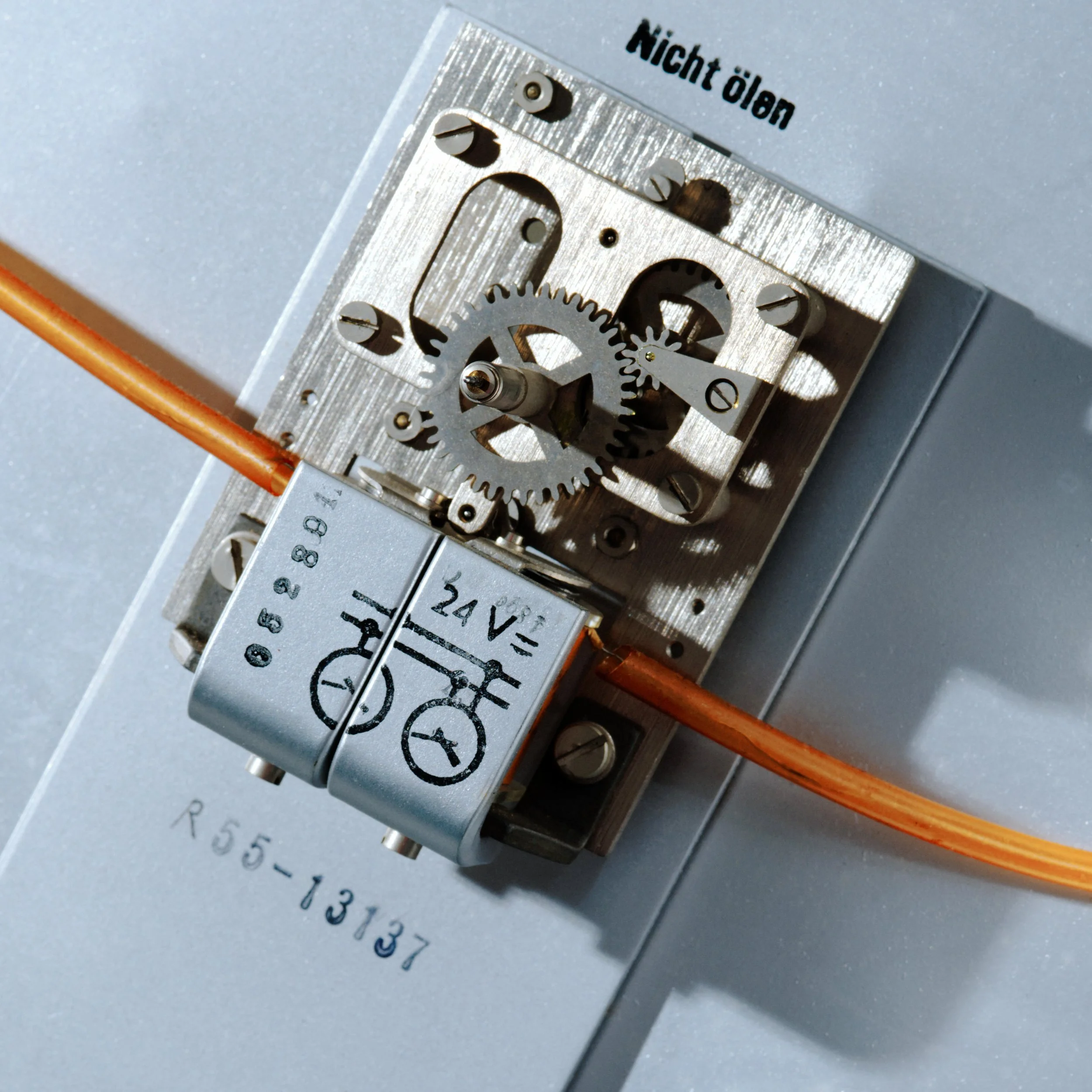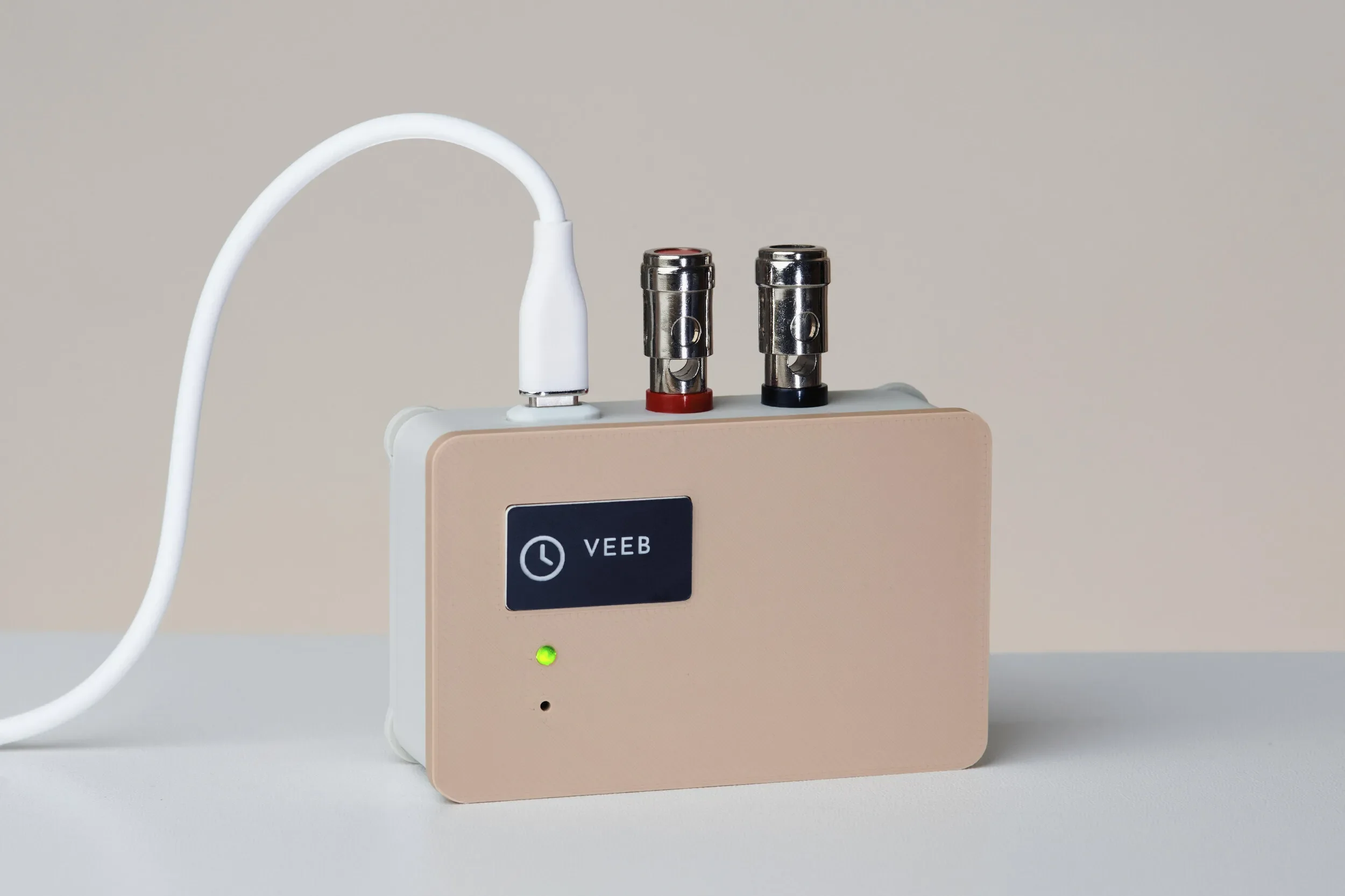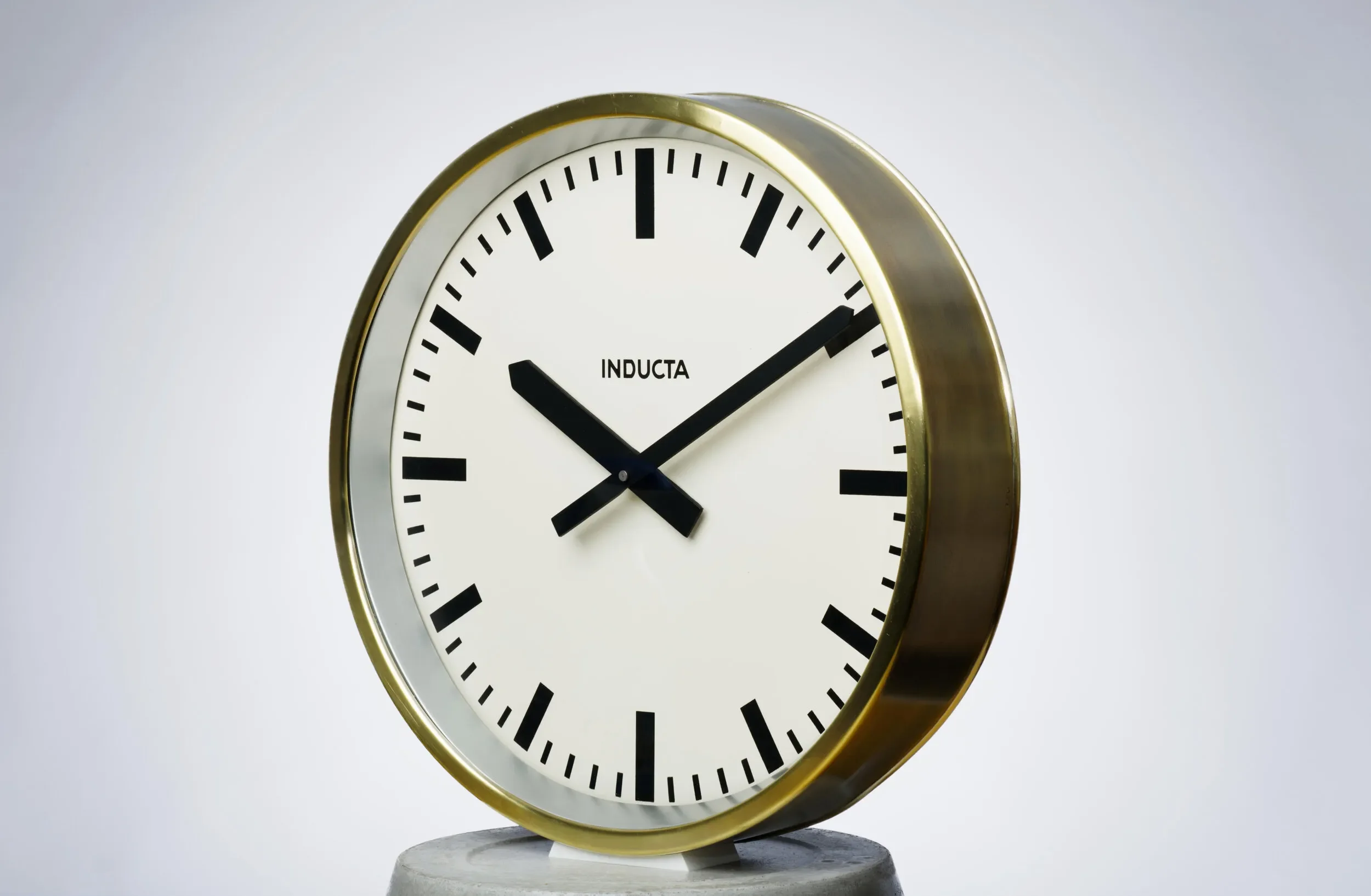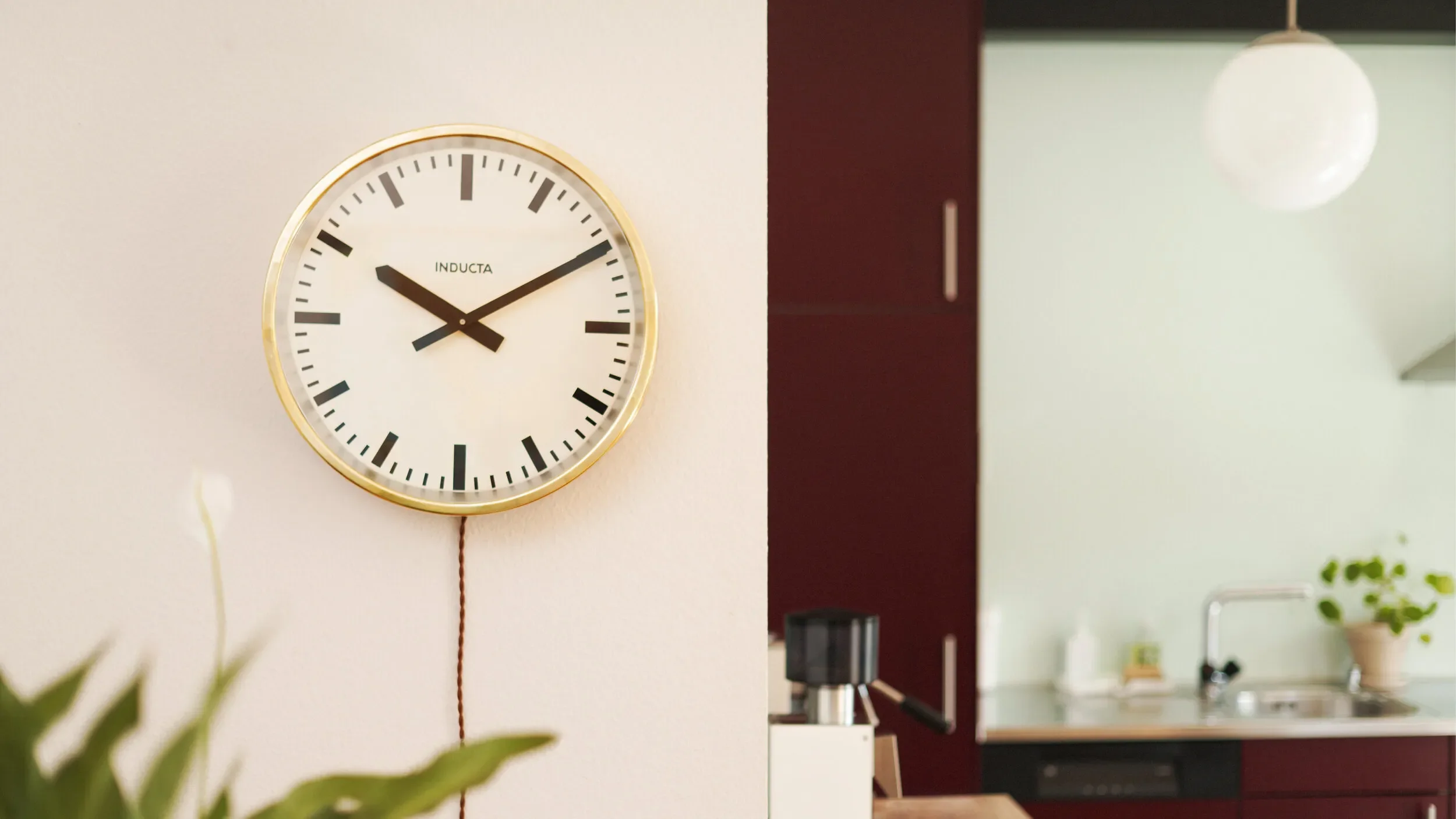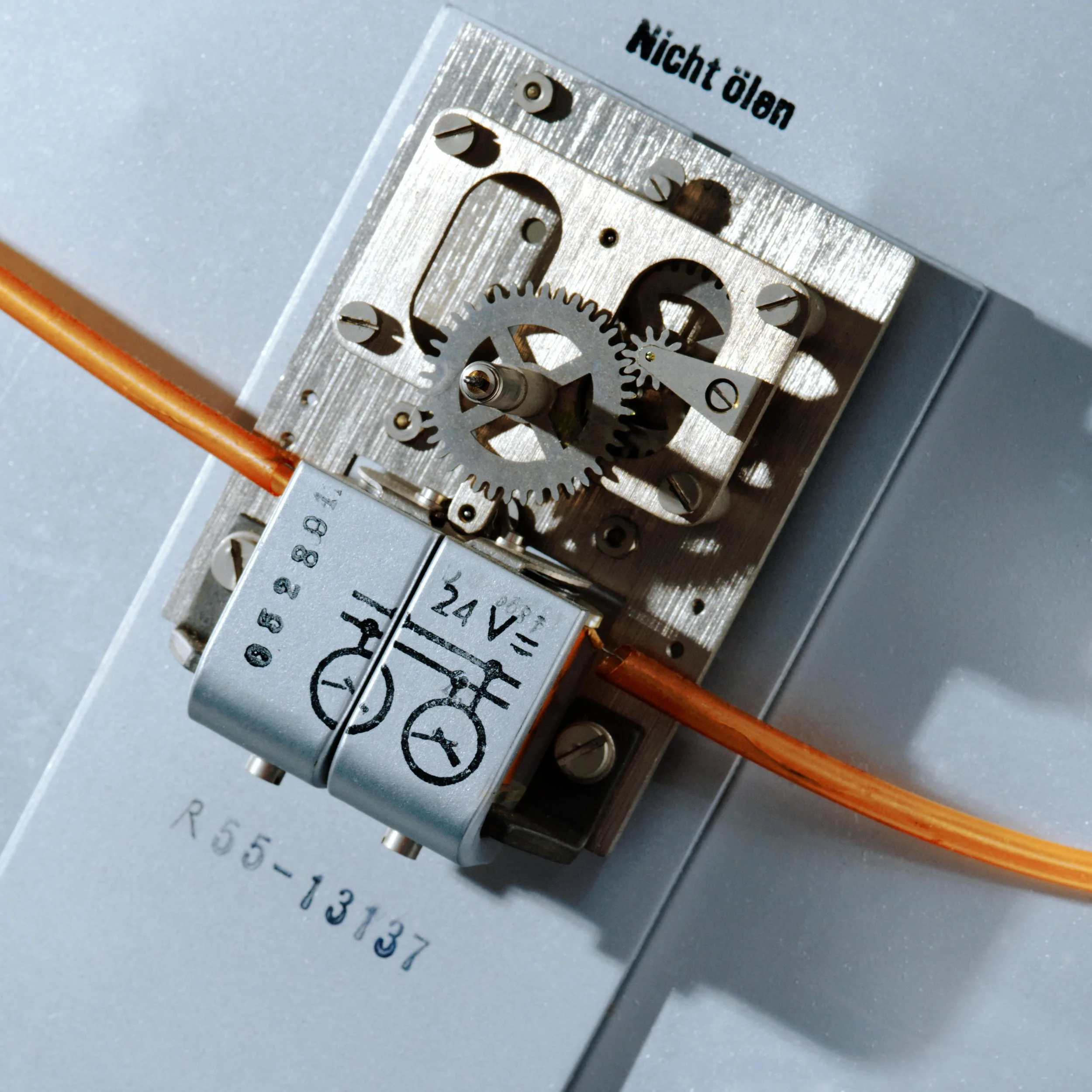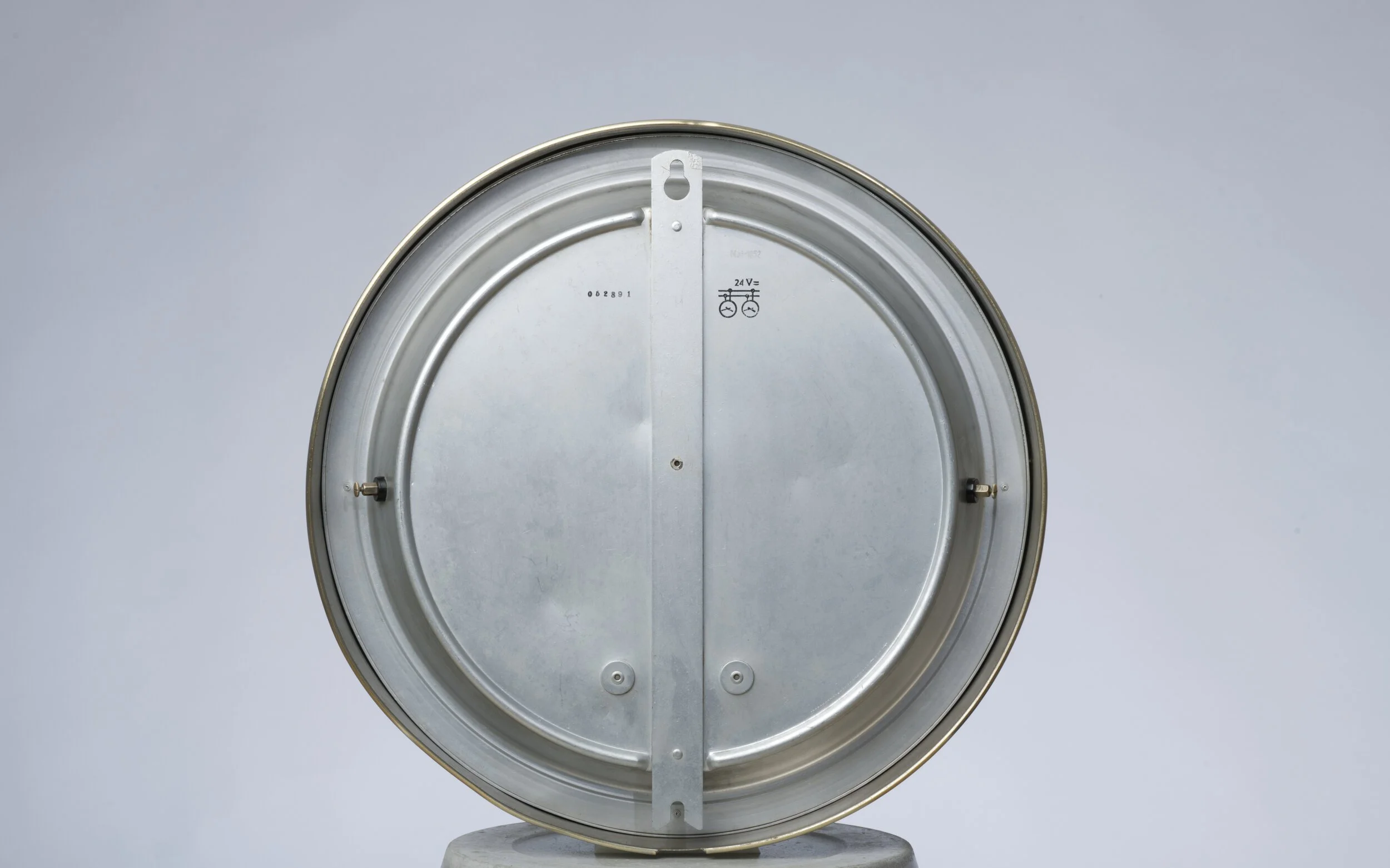

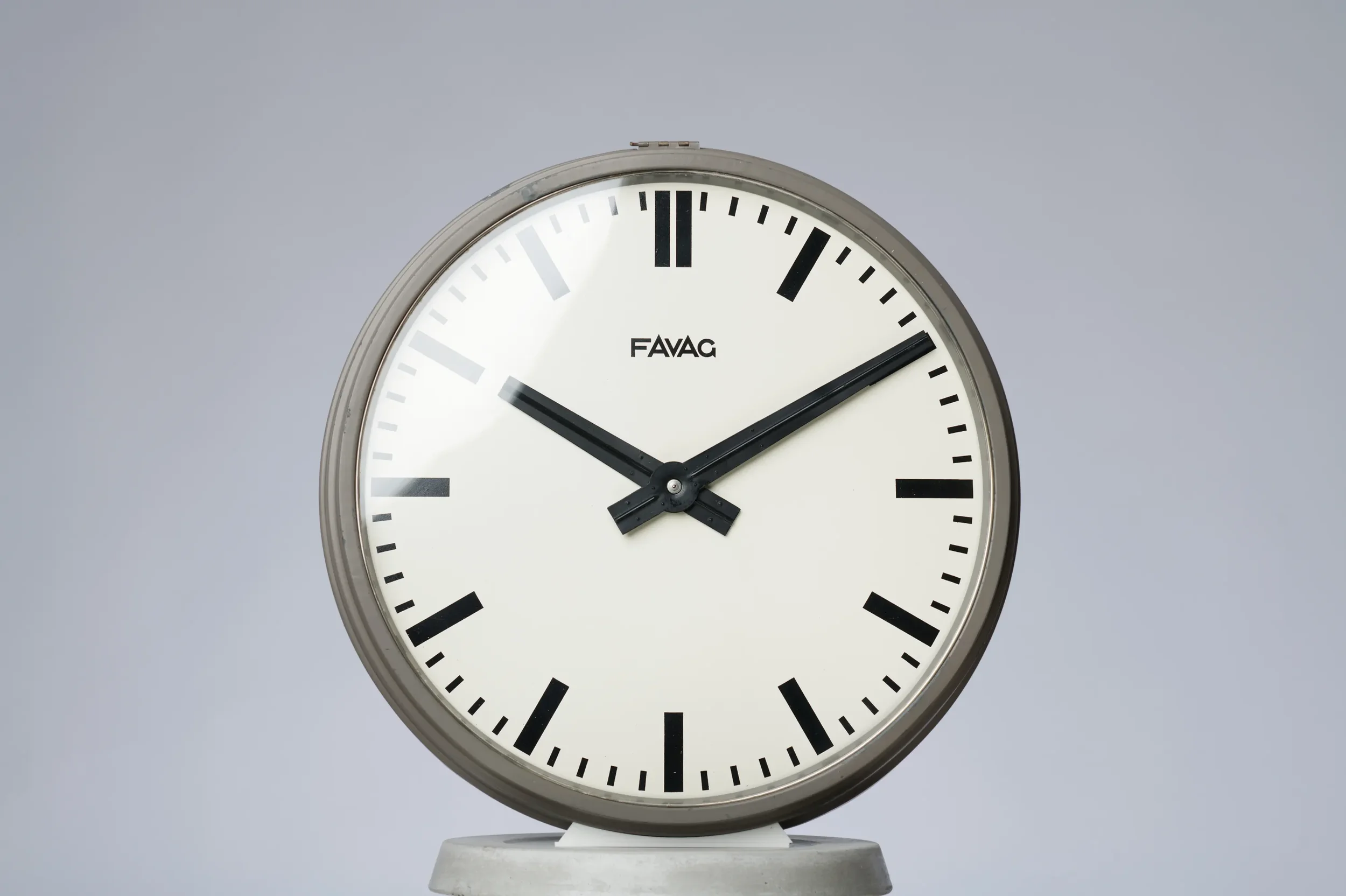
 Image 1 of 3
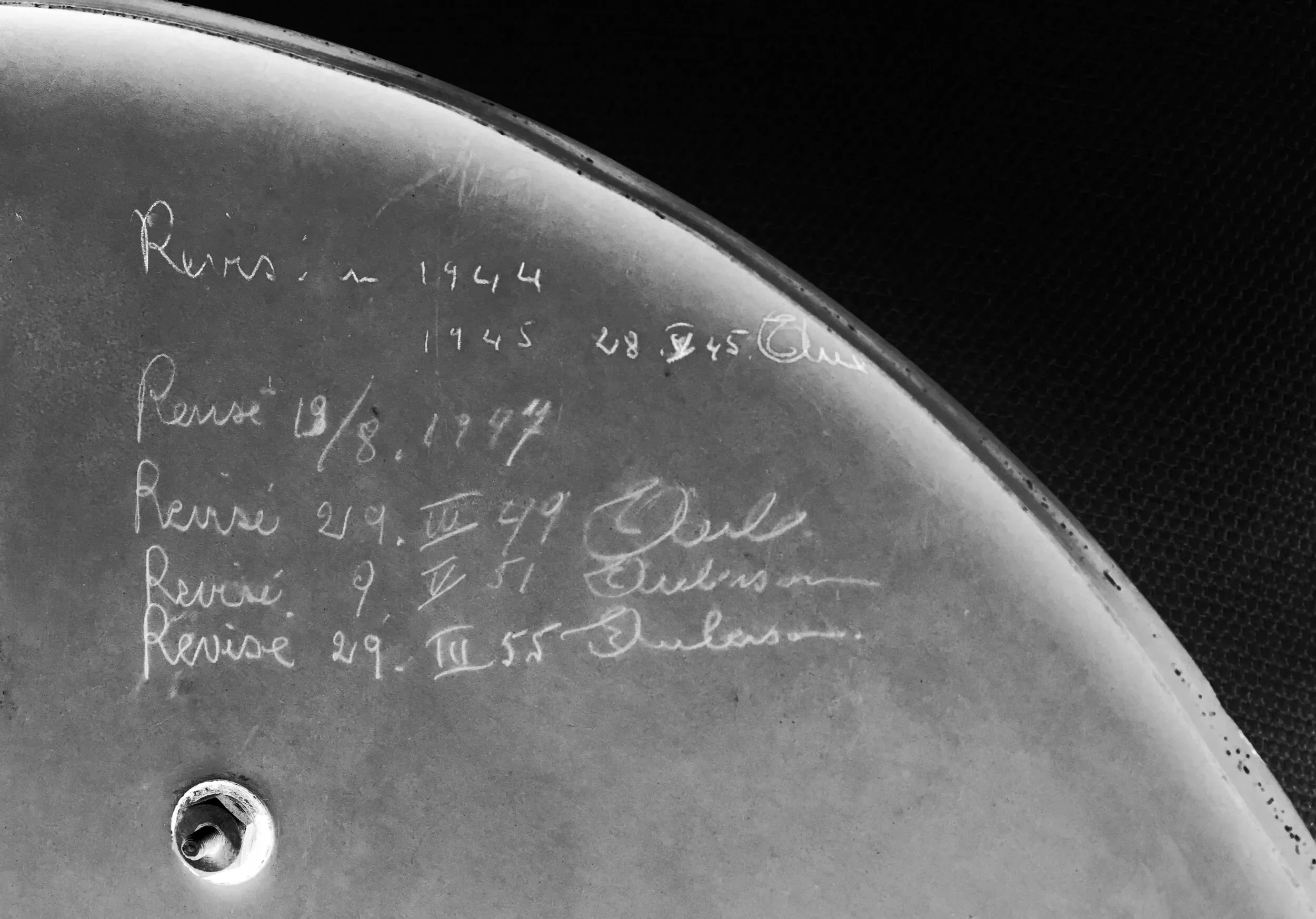 Image 2 of 3
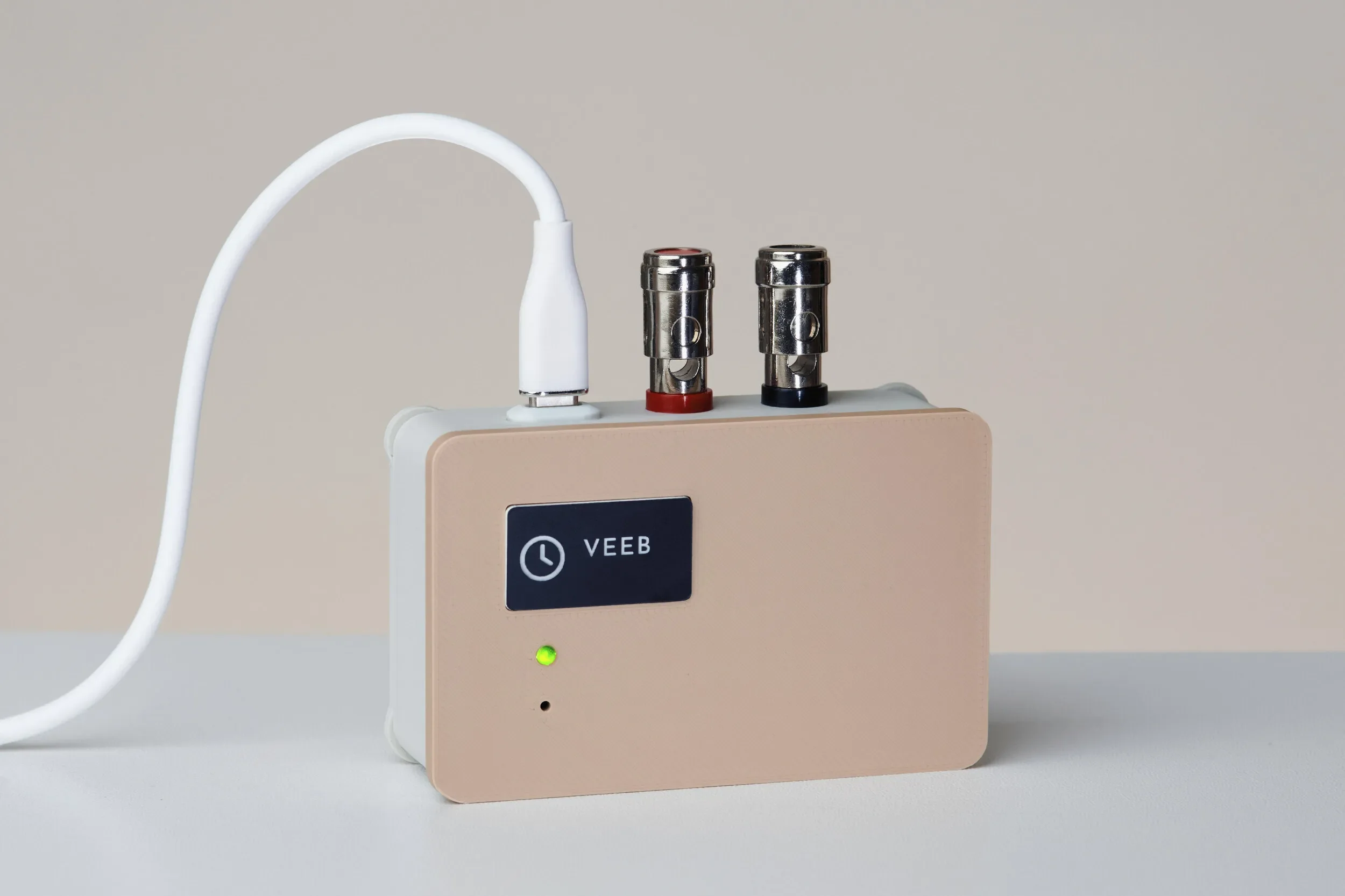 Image 3 of 3
Control the angle of rotation with the yellow slider bar
A Timeline of FAVAG
-
MOBATIME 2002
Moser-Baer introduces MOBATIME as its brand name. The Neuchâtel line ends up in Sumiswald, the Emmental village that also gave Switzerland its railway station clock. Moser-Baer -
The clock division changes hands 1989
W. Moser-Baer AG and J. Bosshard SA jointly acquire FAVAG's clock division in Neuchâtel. The rest of Ascom FAVAG stays where it is; it is the clockmaking that leaves. Mobatime -
Ascom 1987
Hasler, Autophon and Zellweger Telecommunications merge to form Ascom, a group of some thirteen thousand people built to face the coming liberalisation of the Swiss telecoms market. FAVAG becomes Ascom FAVAG. Historisches Lexikon der Schweiz -
Hasler takes over 1932
Hasler of Bern takes over FAVAG. The Neuchâtel works keep their name and their clocks, but the independence that began with Hipp is over. Oscahr, Université de Strasbourg -
FAVAG SA 1927
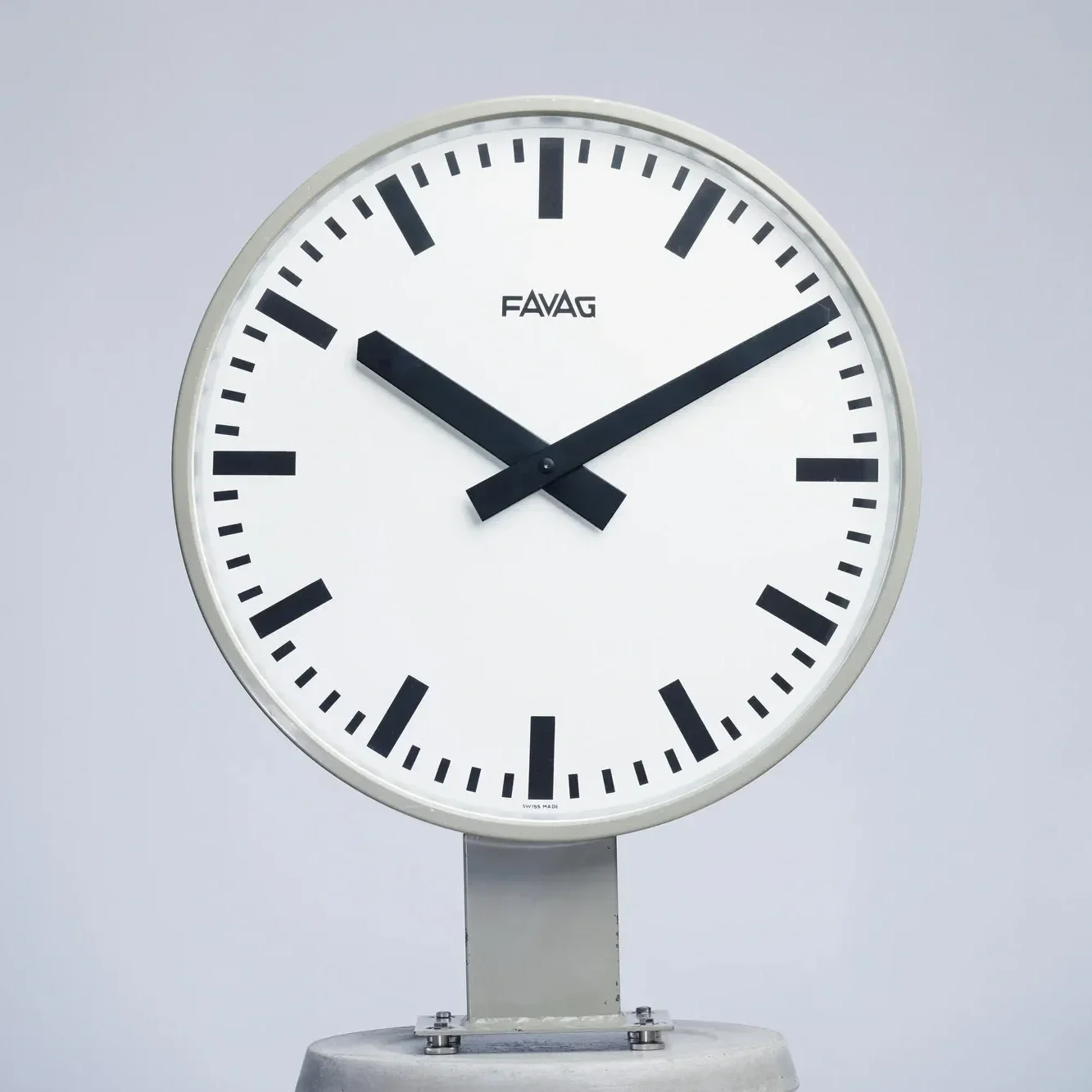
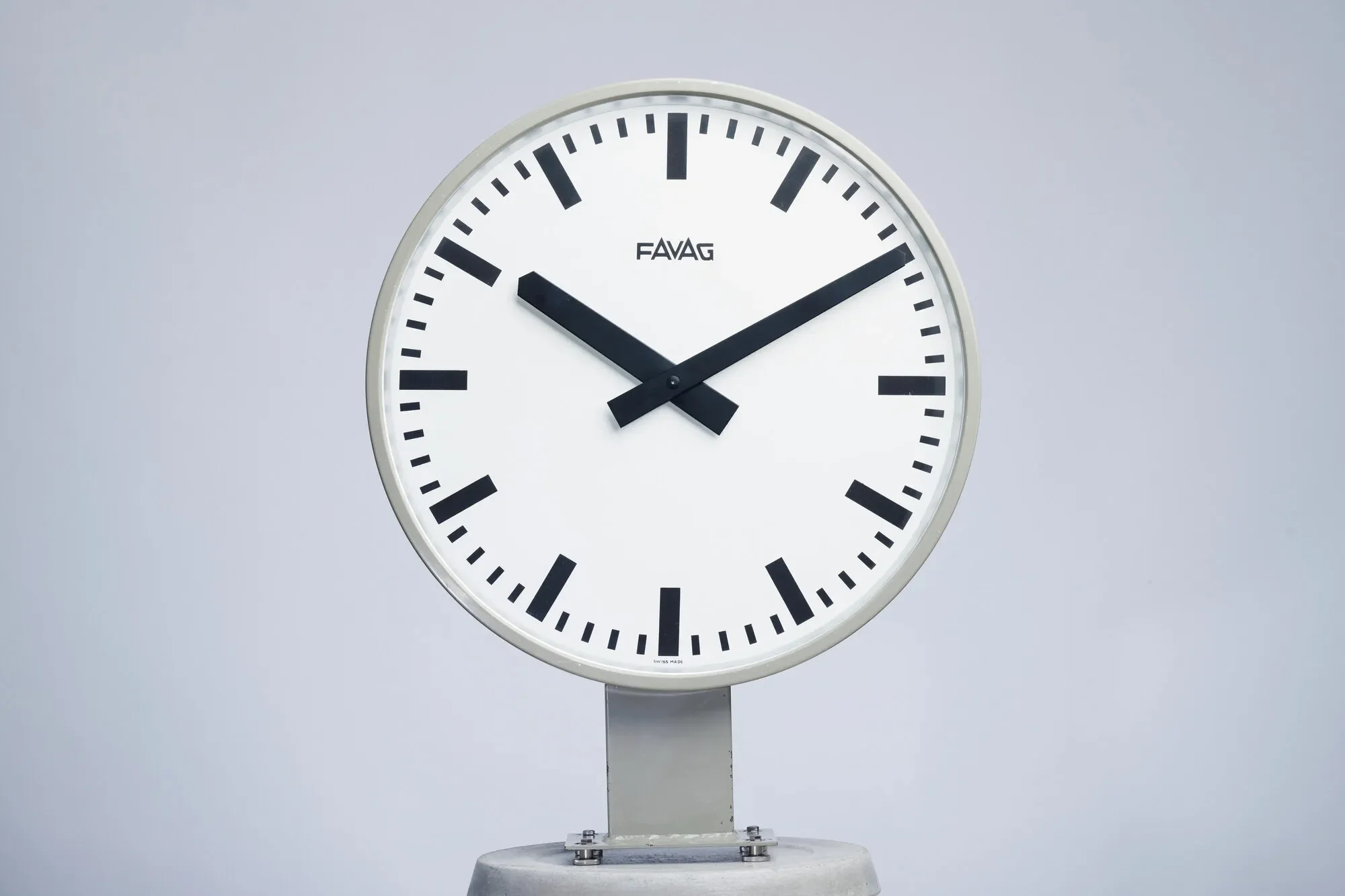
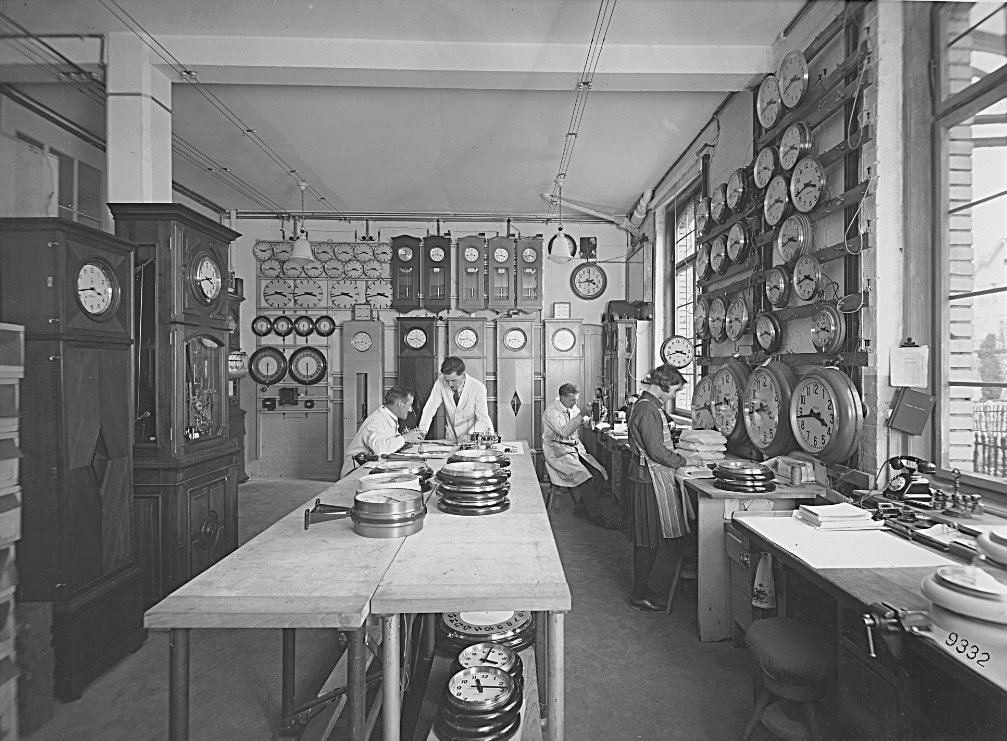
Favarger & Cie SA is renamed FAVAG, short for Fabrik elektrischer Apparate AG. The name on your clock dates from here. Oscahr -
Favarger & Cie 1908
The Hipp name comes off the letterhead nineteen years after he left. Albert Favarger runs the firm as director until 1920. A bankruptcy follows, and the business is continued under the FAVAG name. Historisches Lexikon der Schweiz, Science Museum Group -
Peyer & Favarger, Succ. de M. Hipp 1889
At seventy-five Hipp hands the factory to his engineers Albert Favarger and A. de Peyer, and the works carry their names alongside his for the next nineteen years. He moves to Fluntern to be near his daughter, and dies there in 1893. Biography, Science Museum Group -
Minute jumpers 1869
Hipp patents the impulse system for daughter clocks known as minute jumpers, which steps every dial on a network forward together at the top of each minute. It is why a building full of clocks can agree with itself. -
Electric clocks reach Geneva 1862
Hipp installs an electric clock system in Geneva. Mother-and-daughter networks go on to spread across Europe, into stations, schools, hospitals and spa towns on every continent. -
Fabrique des télégraphes M. Hipp 1860
Hipp leaves the federal workshop and founds his own telegraph and electrical apparatus factory in Neuchâtel. It turns quickly to electric clock networks, and to distributing exact time down telegraph wires from 1863. Over forty years he brings more than twenty inventions to maturity, including the astronomical pendulum of the Neuchâtel observatory in 1877. Deutsche Biographie, Biography -
The chronoscope 1850
Hipp builds an instrument that measures intervals to a thousandth of a second, timed not by a pendulum but by a metal reed vibrating a thousand times a second. Armies used it to clock projectiles. Psychologists used it to try to measure the speed of thought. Science Museum Group -
The Hipp toggle 1843
A miller's son from Blaubeuren, lame since a childhood fall, apprenticed to a clockmaker at sixteen, Matthäus Hipp shows his toggle mechanism at an exhibition in Berlin, described only as a clock with its movement below the pendulum. He had worked out the principle by 1834 and fitted it to a clock in Reutlingen the year before. Sotheby's, Wikipedia