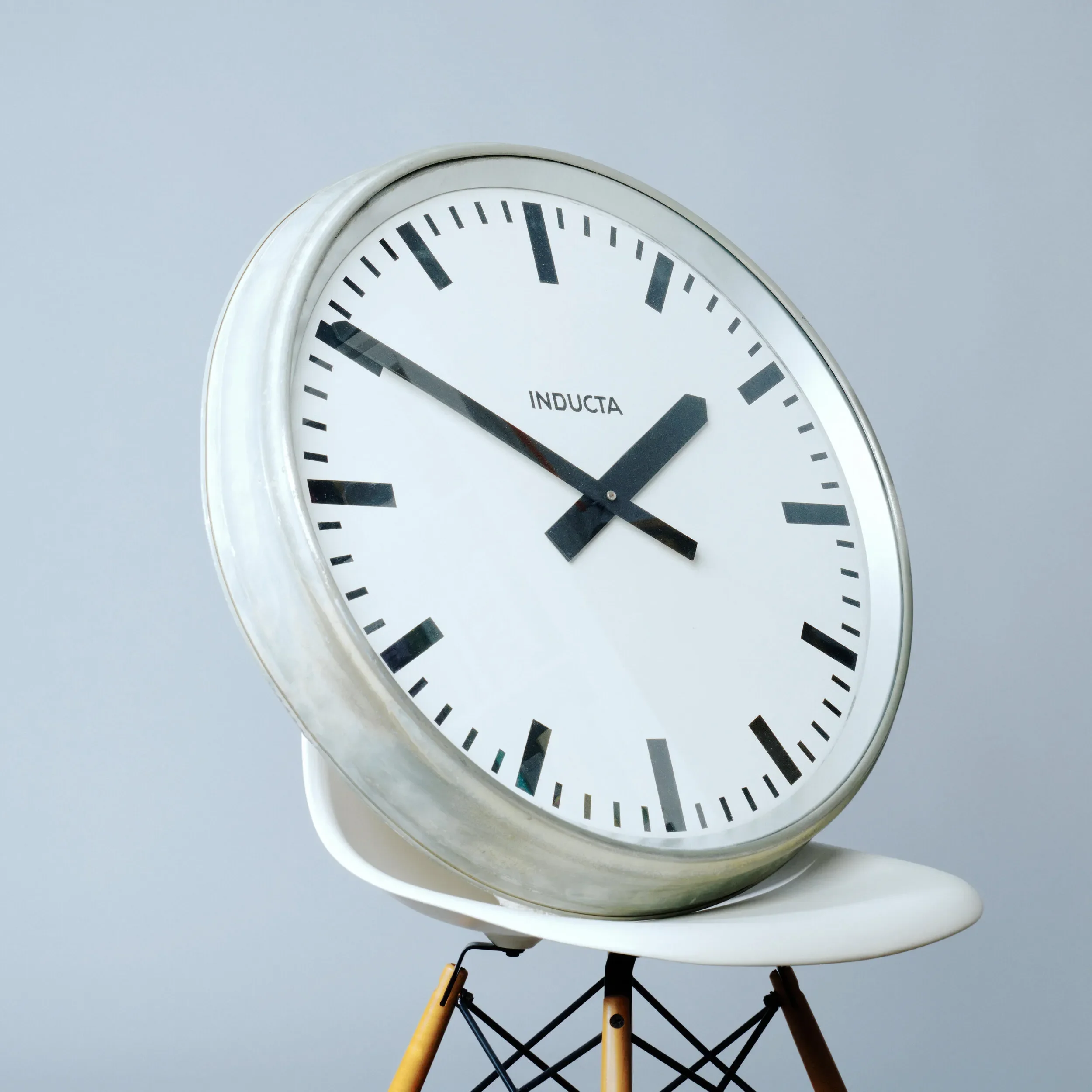
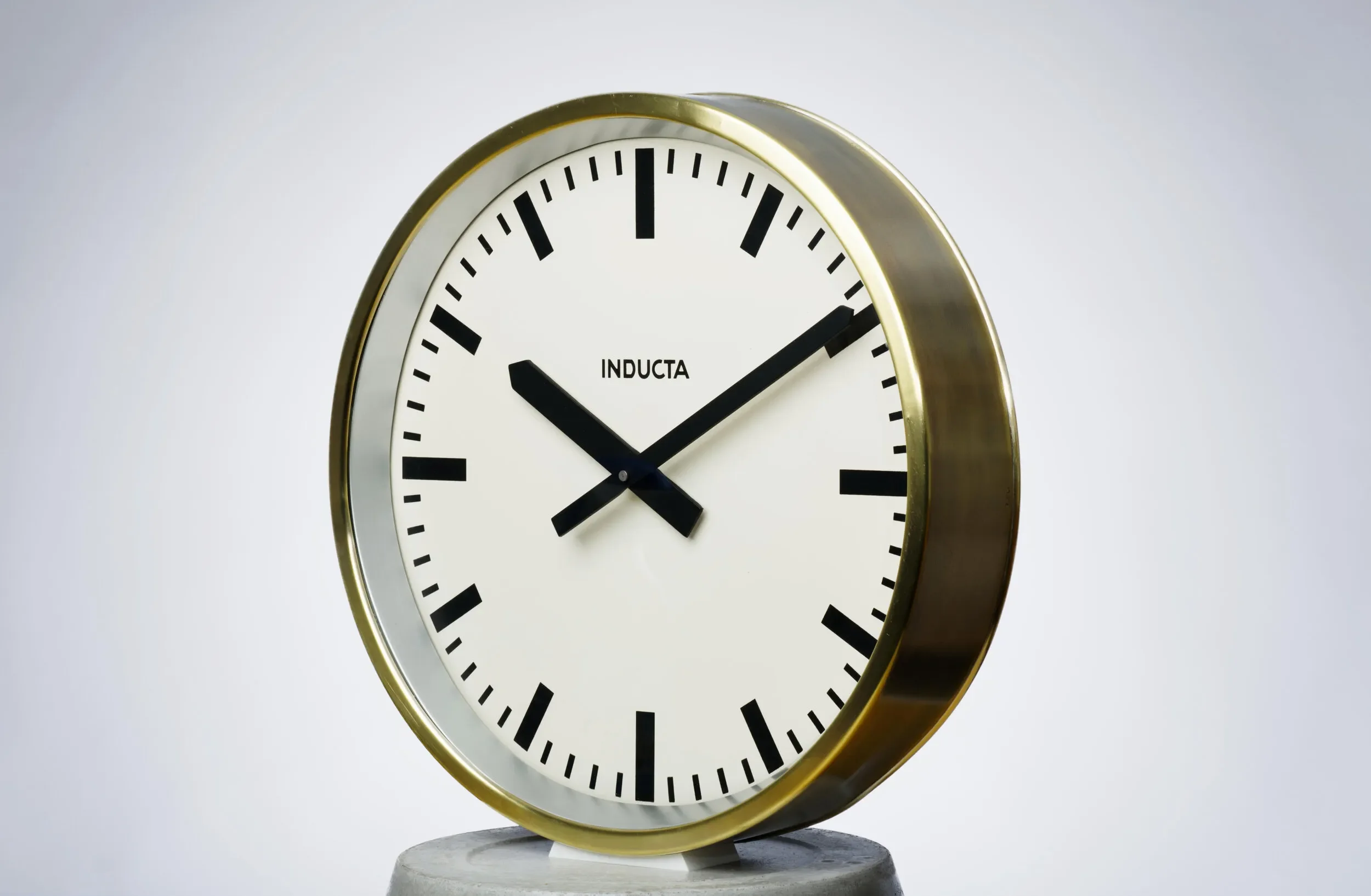
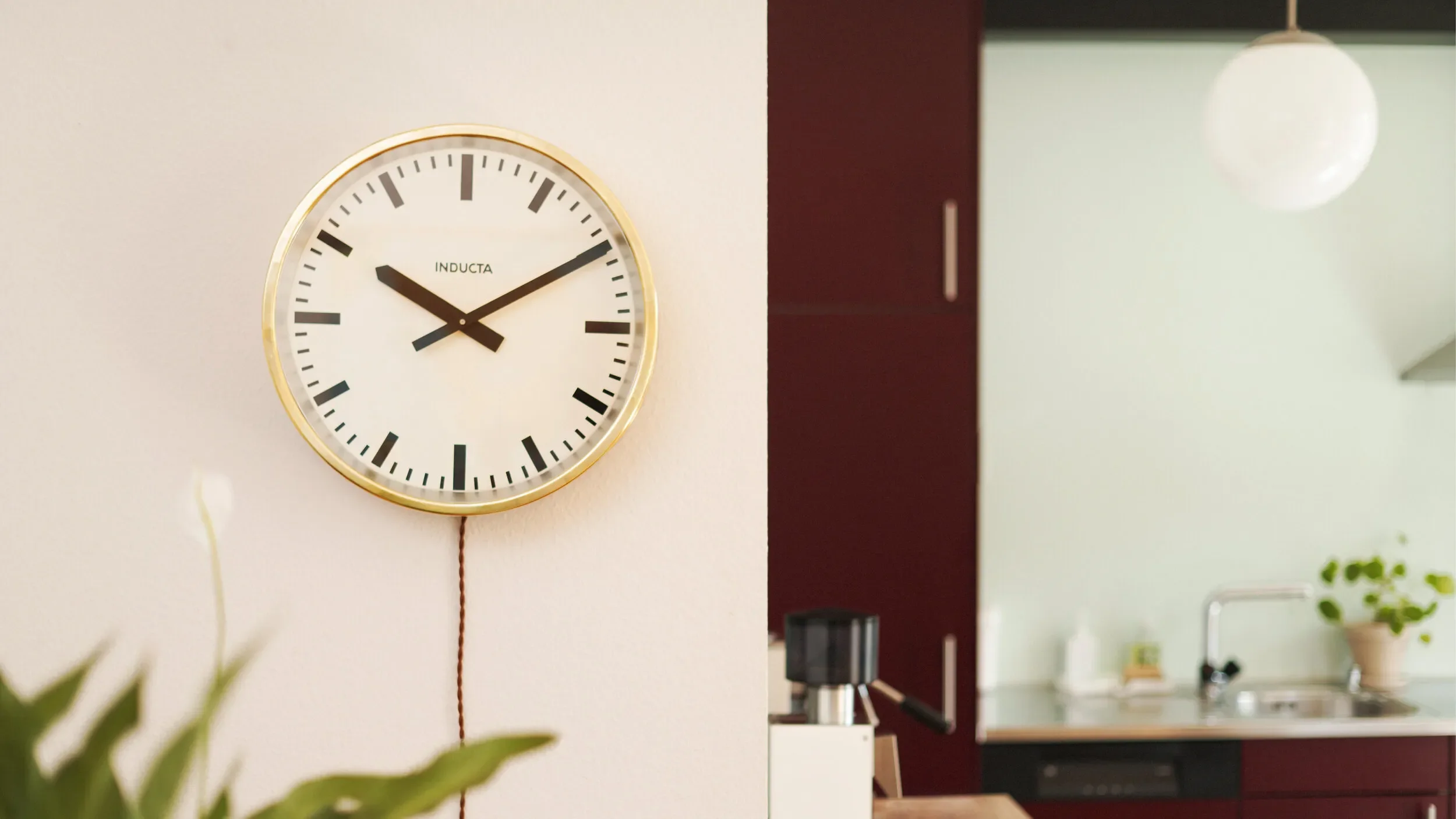
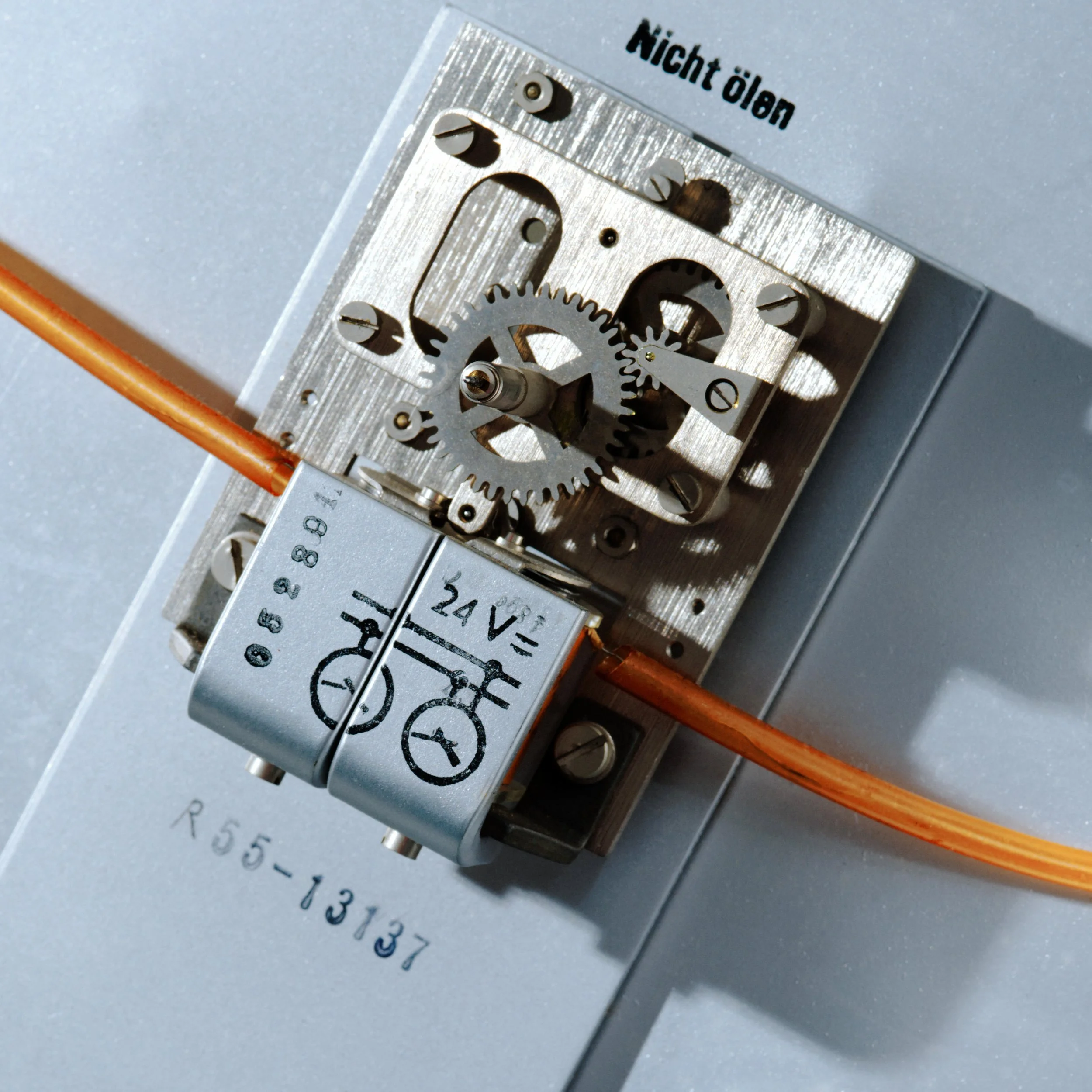
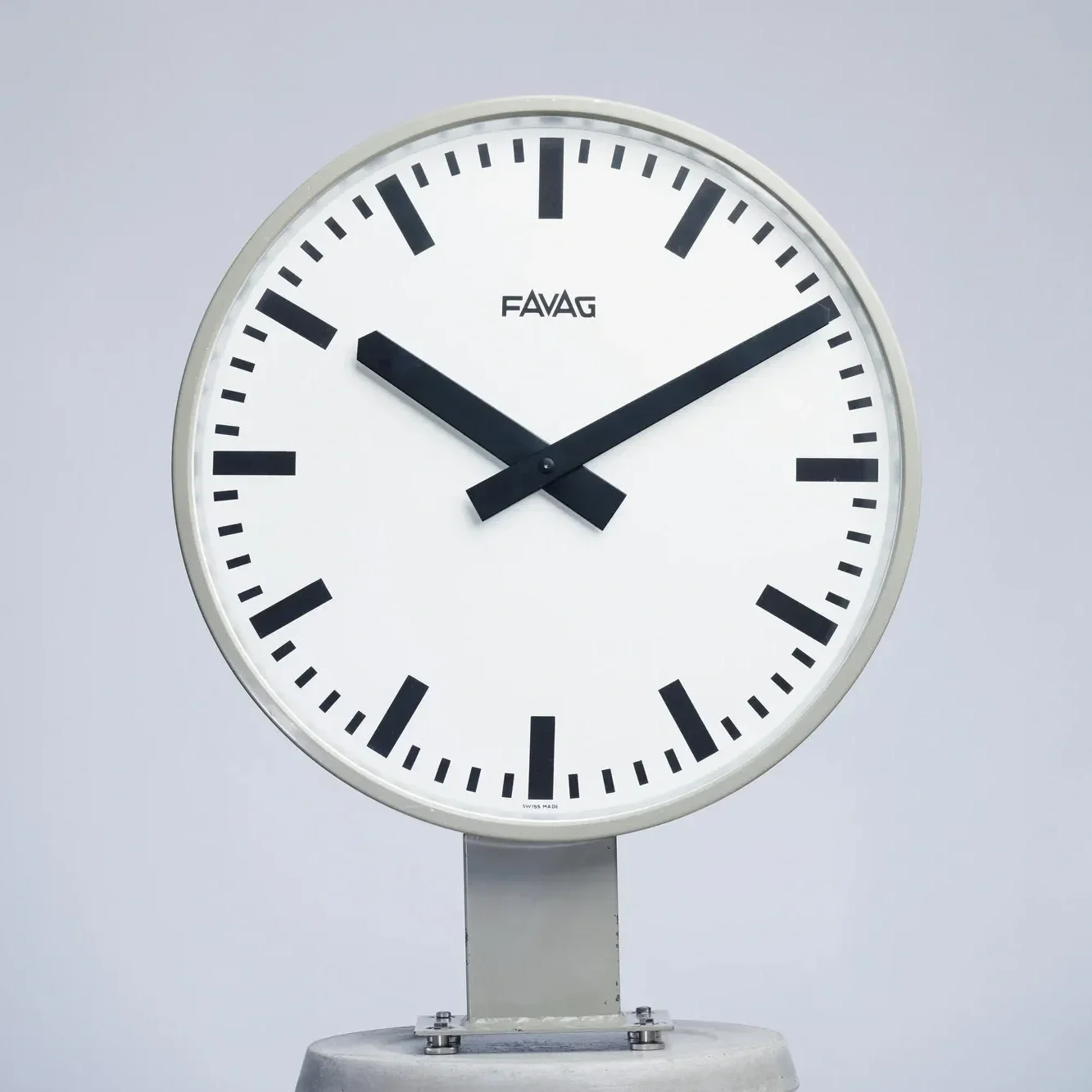
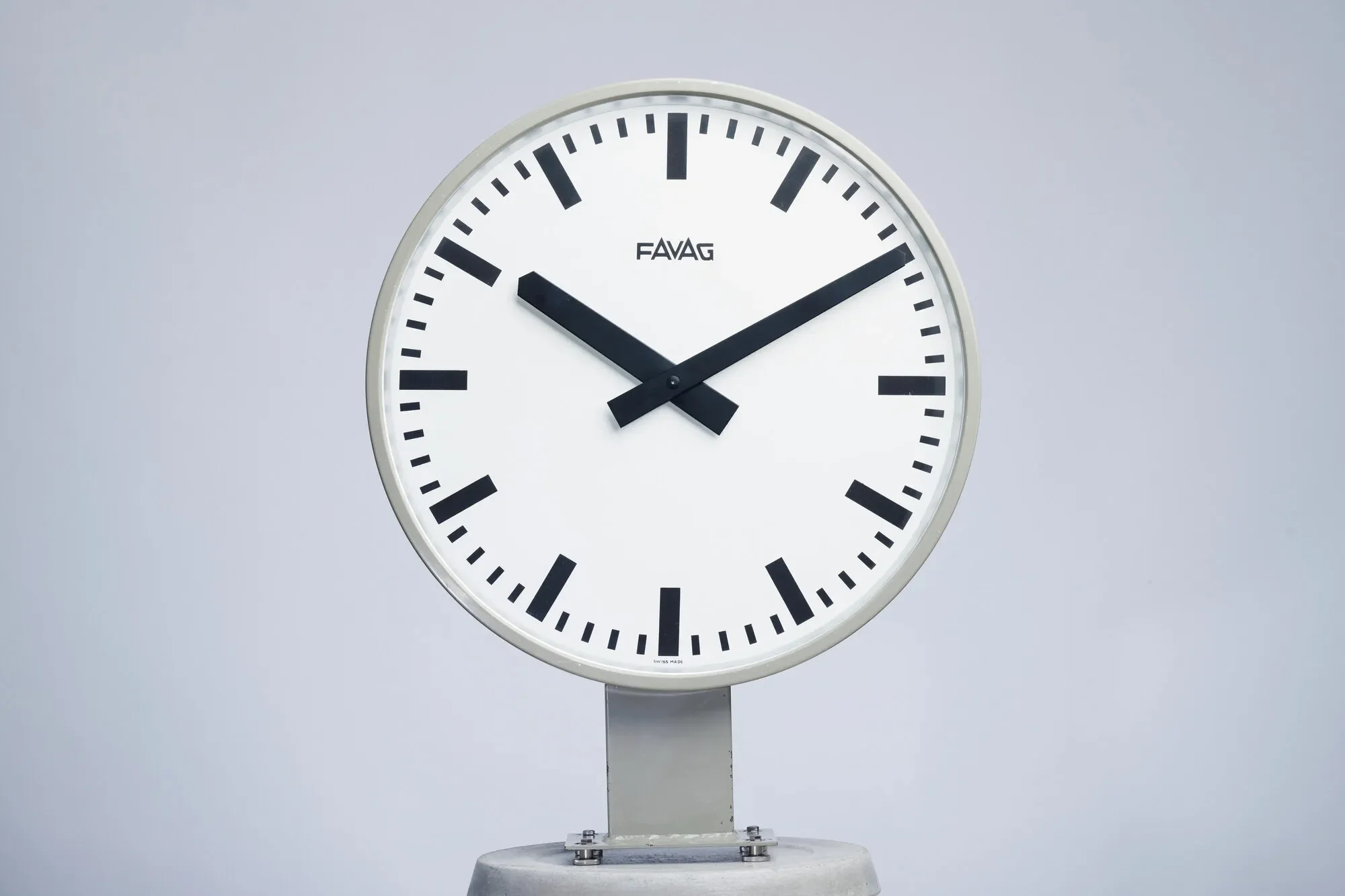
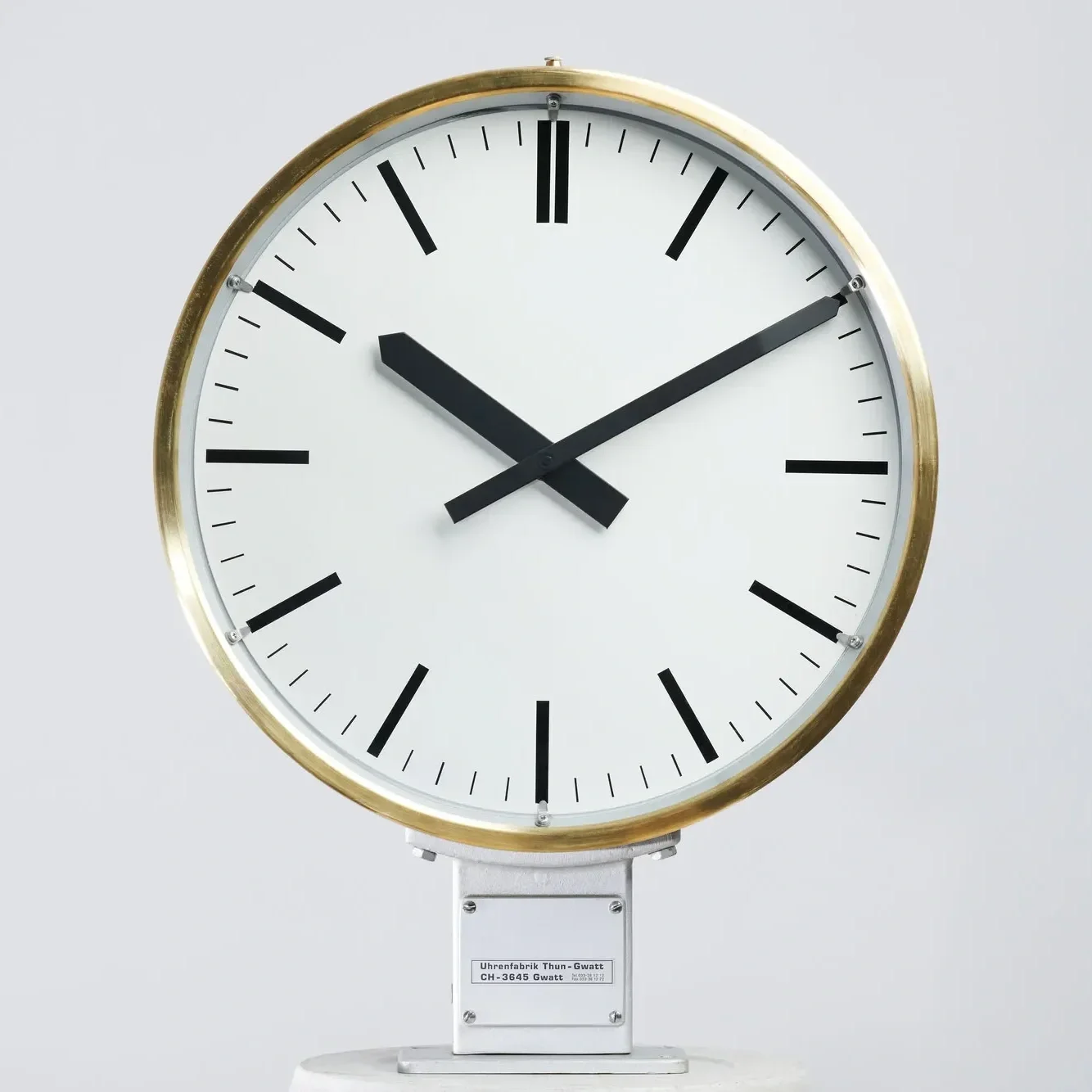
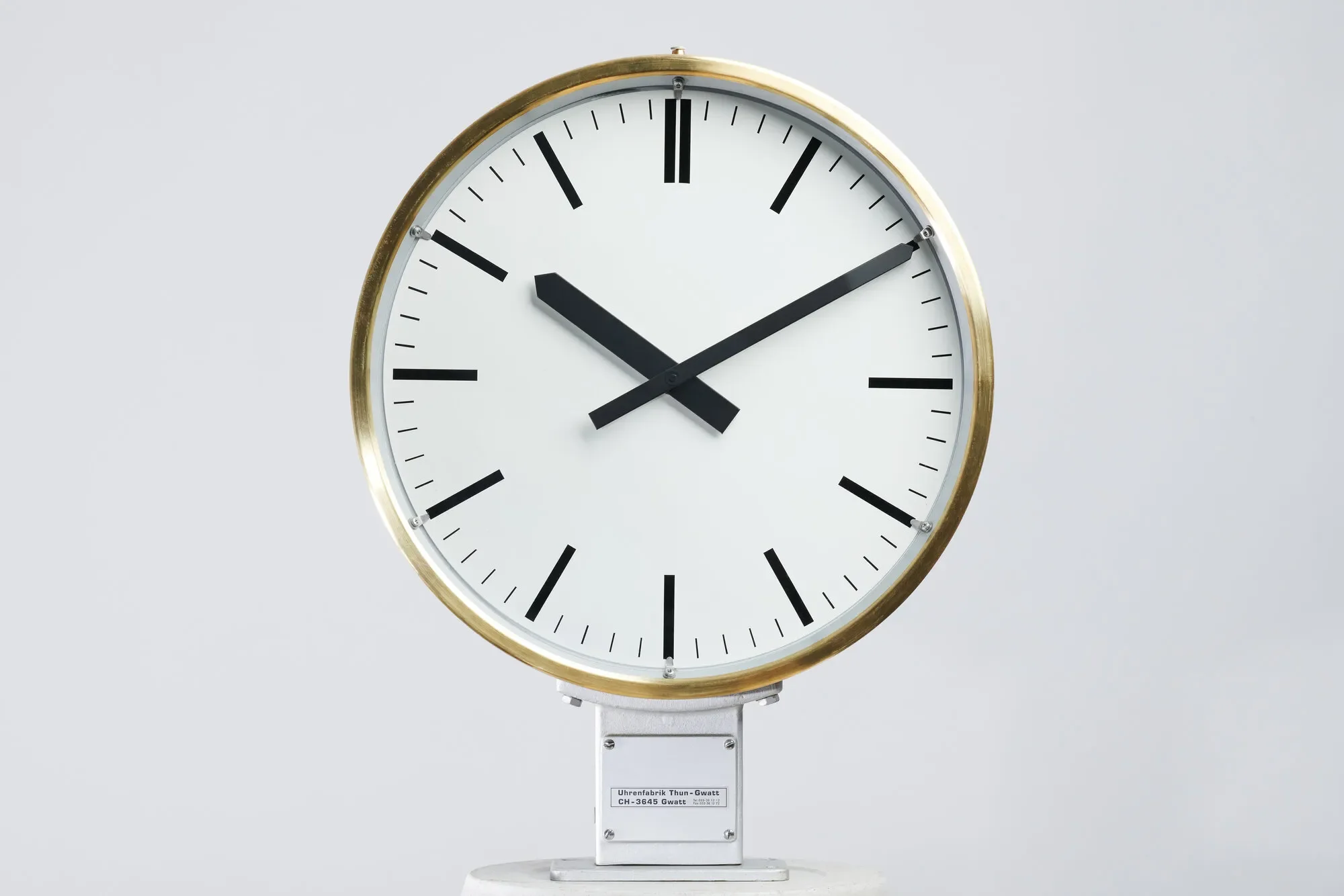
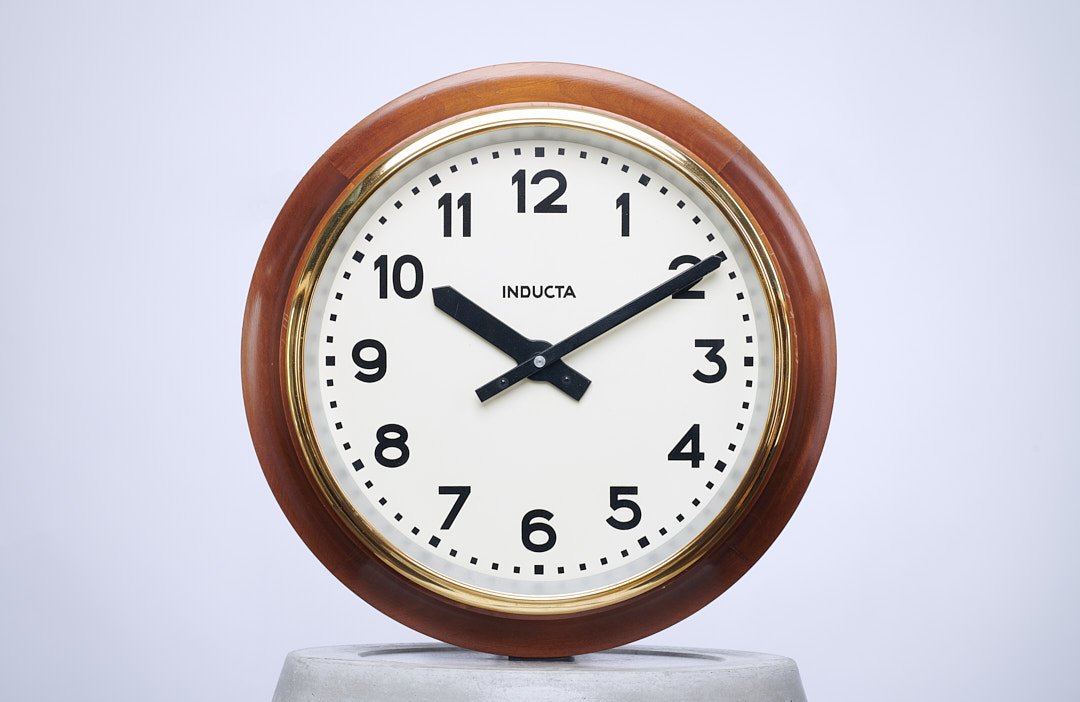
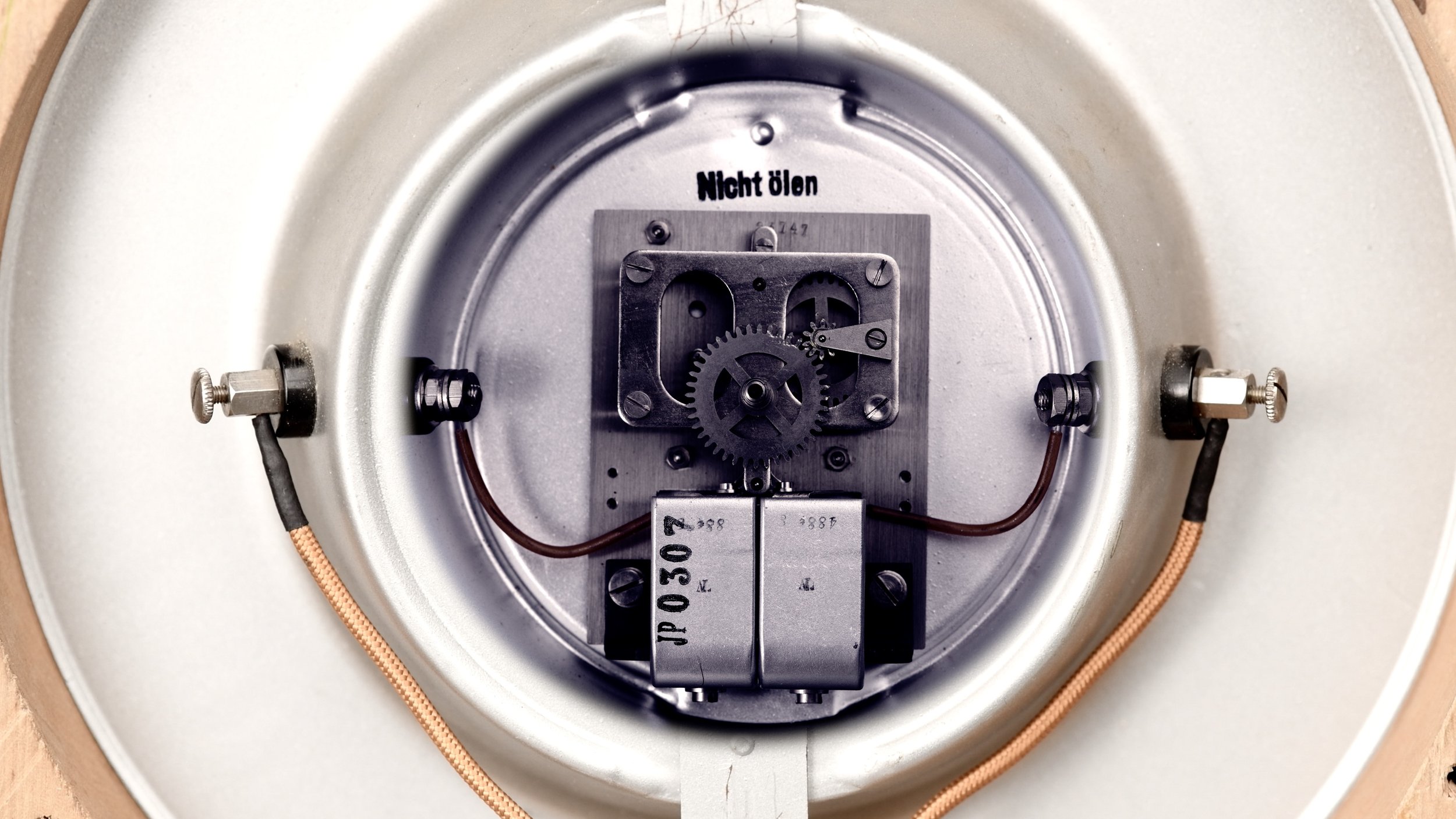
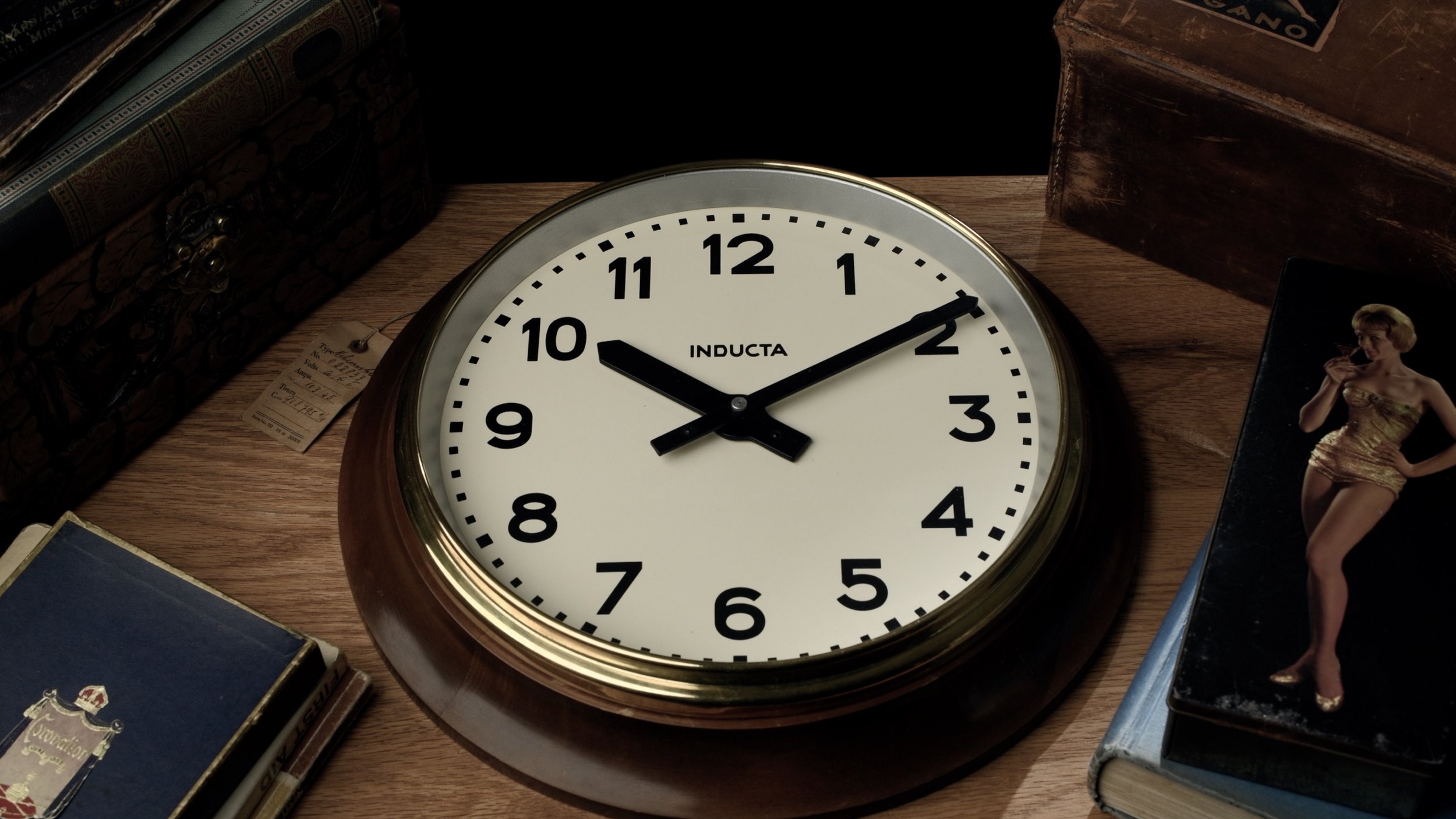
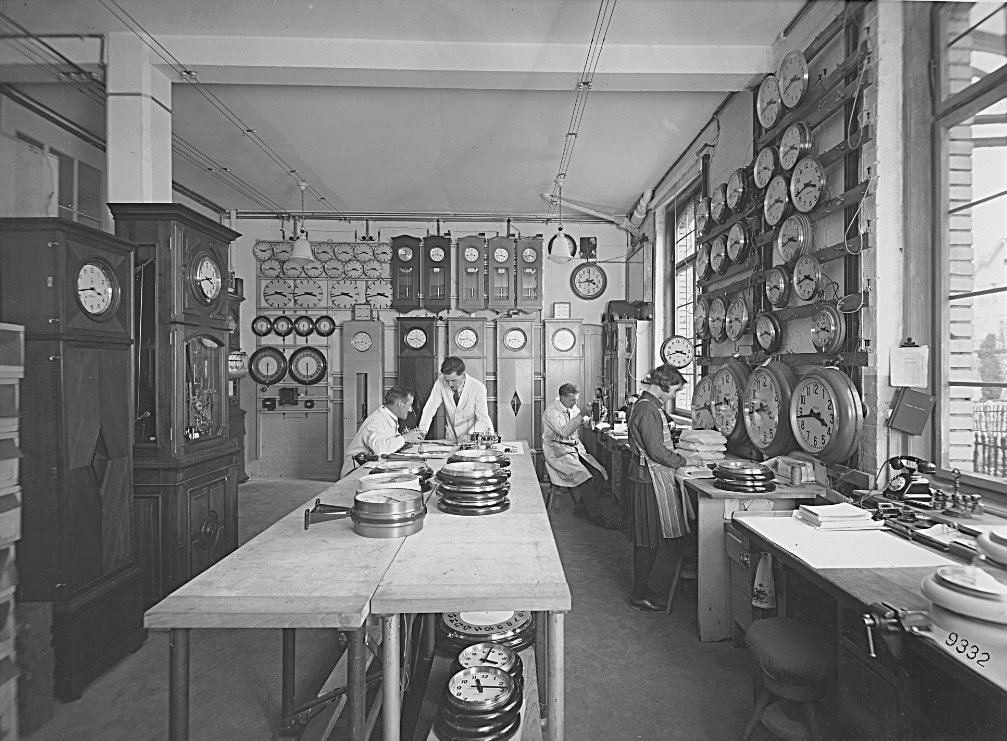
Some clocks tell the time quietly, in the background. This one asks to be looked at first, and told the time second. Flurina is a FAVAG wall clock, built in the 1940s in Neuchâtel, Switzerland, when the company was still perfecting the electric clock systems it would later become known for. Silence, then once a minute, a single tick, the kind of sound a clock only makes when there's real mechanism behind it.
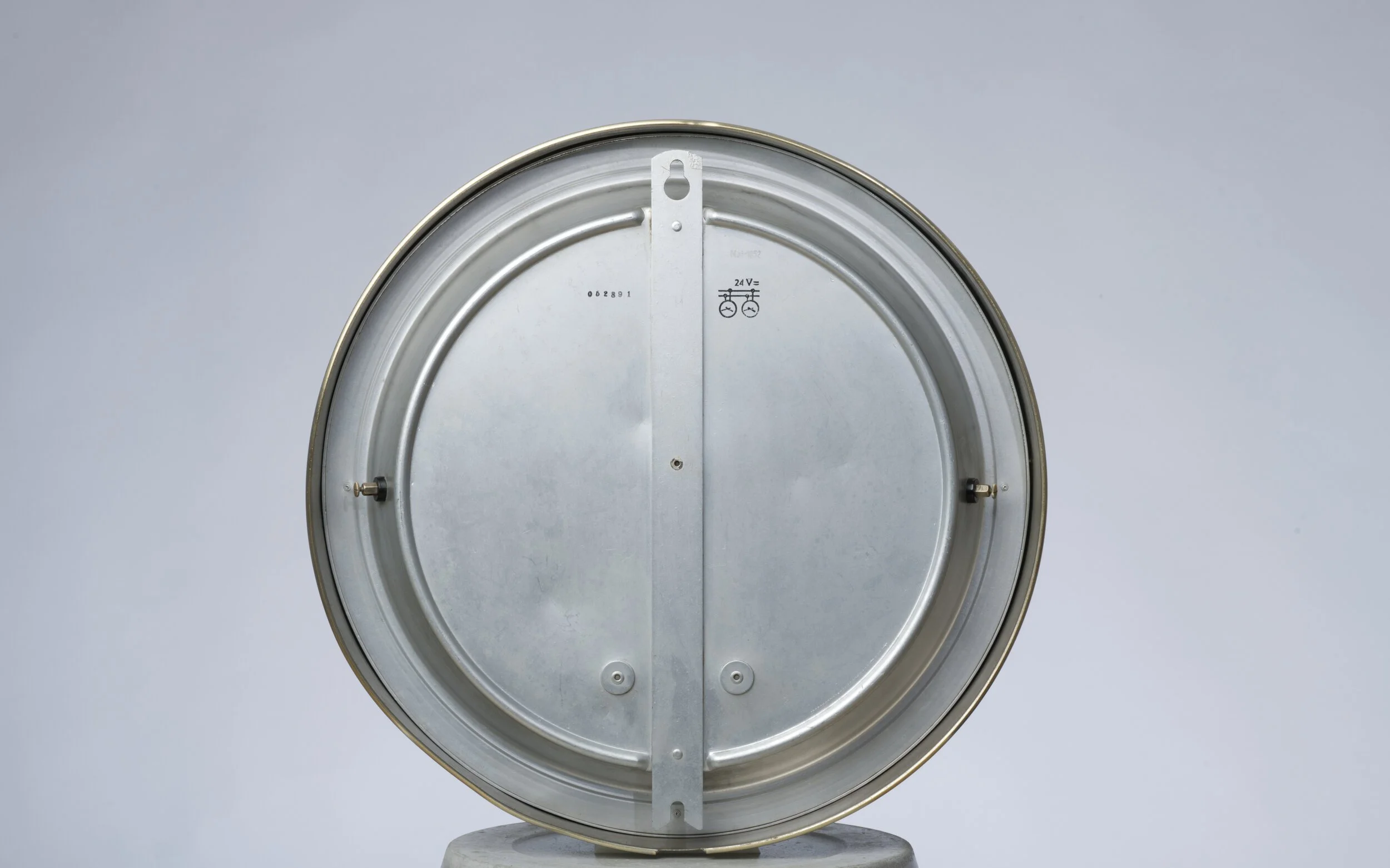
The tiered metal frame, clamshell opening, and brass hinge give it a distinctly industrial presence: heavier and more deliberate than a typical wall clock, built to be handled and opened, not just glanced at.
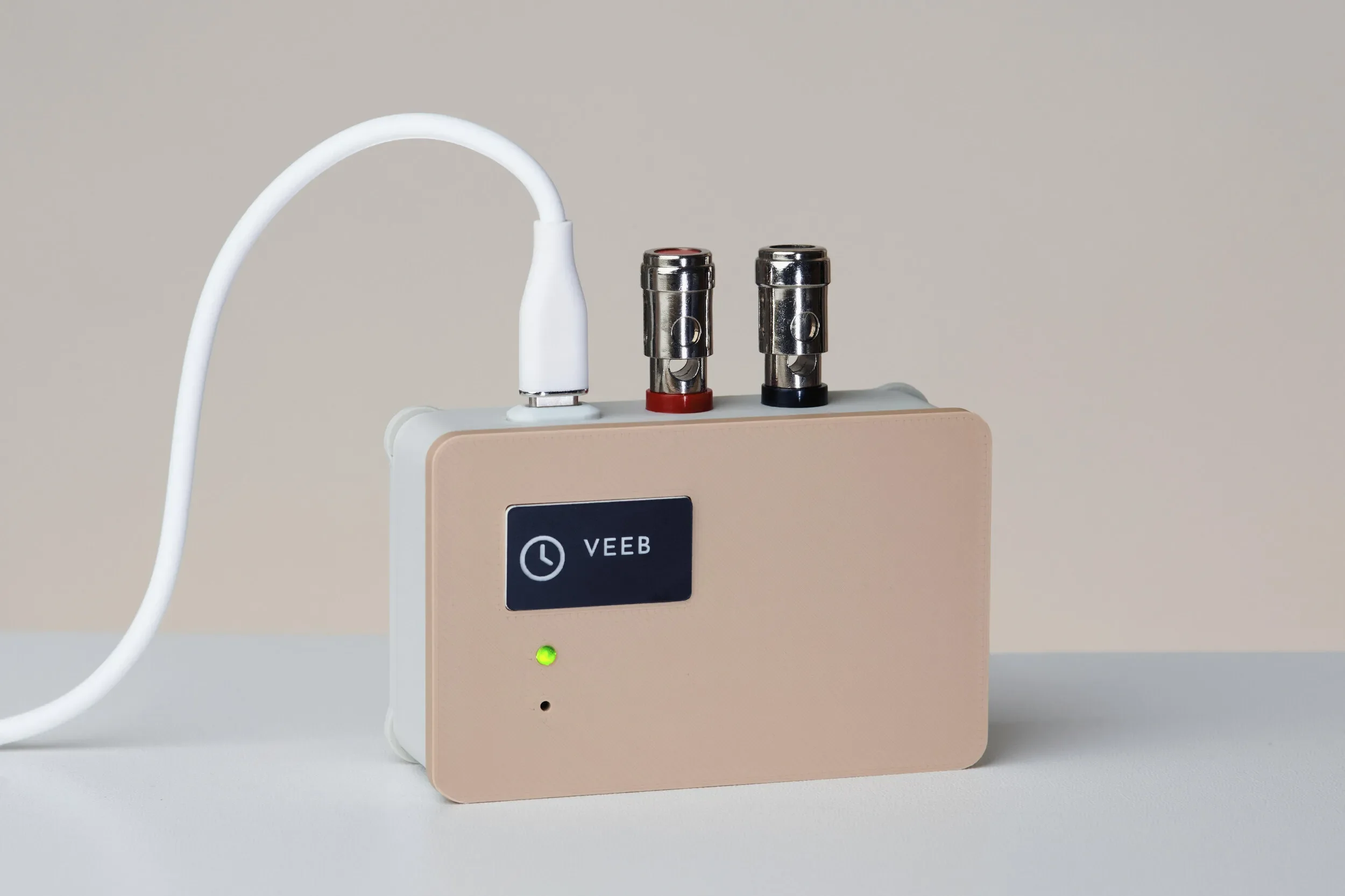
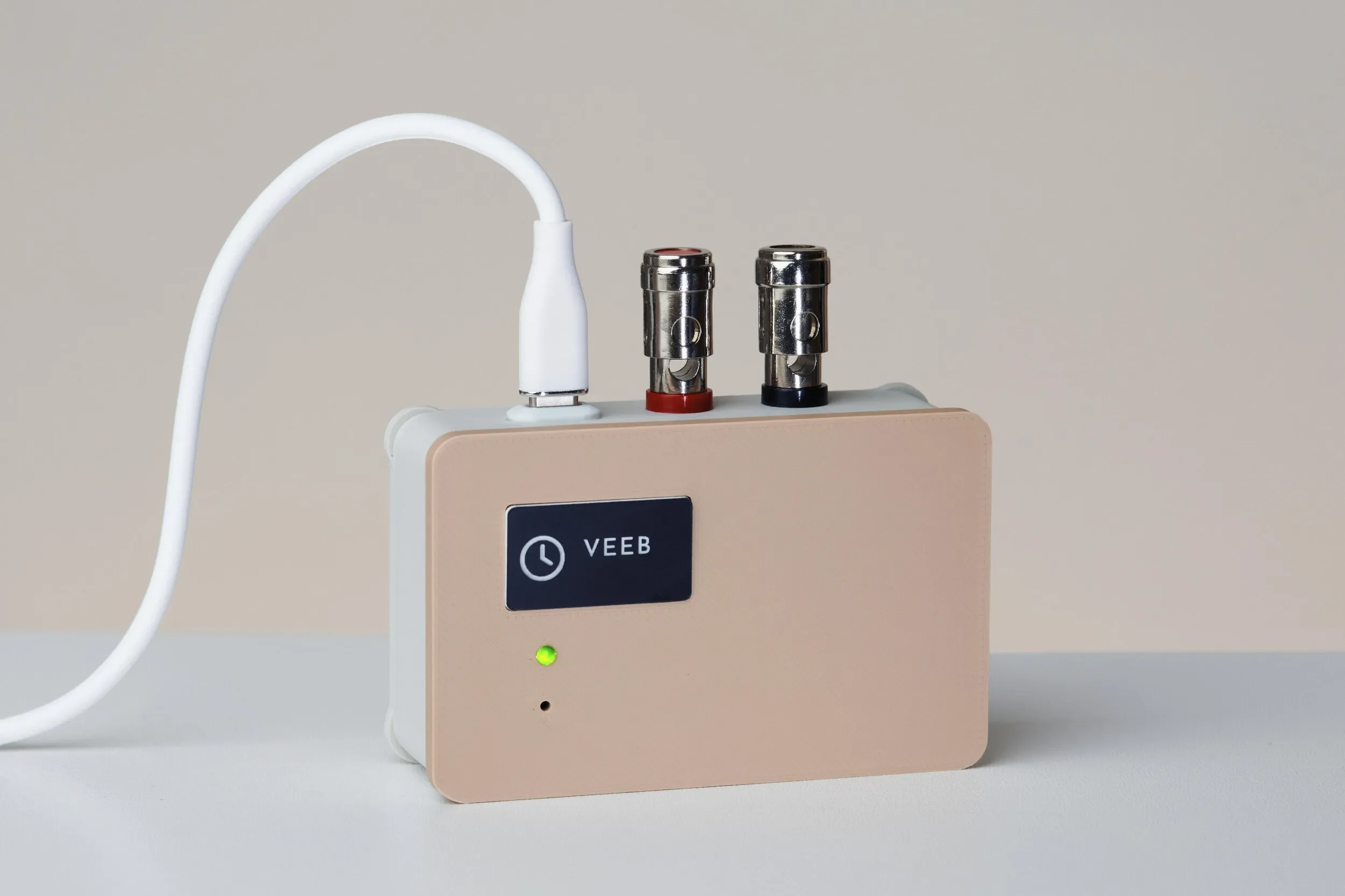
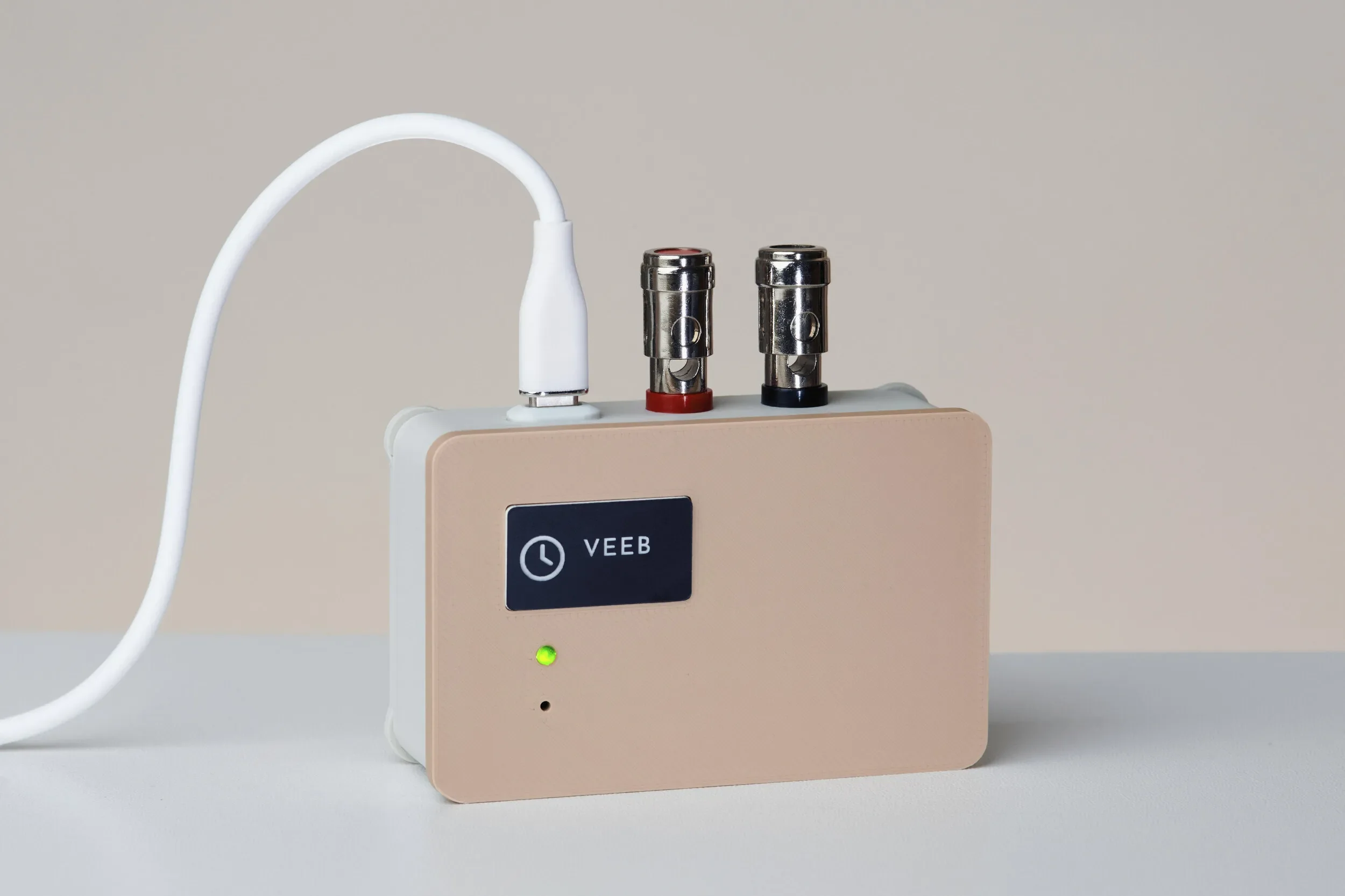
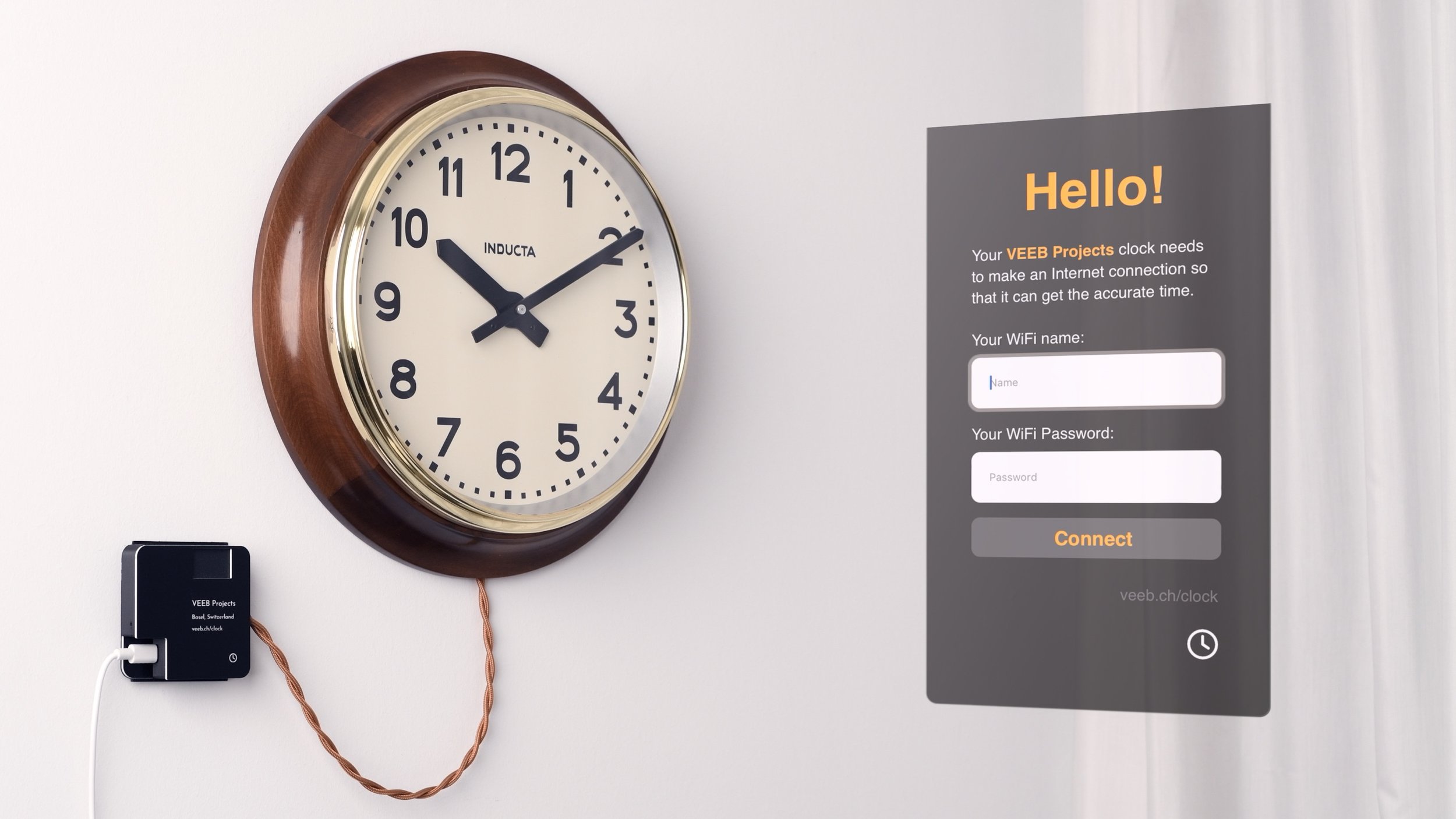
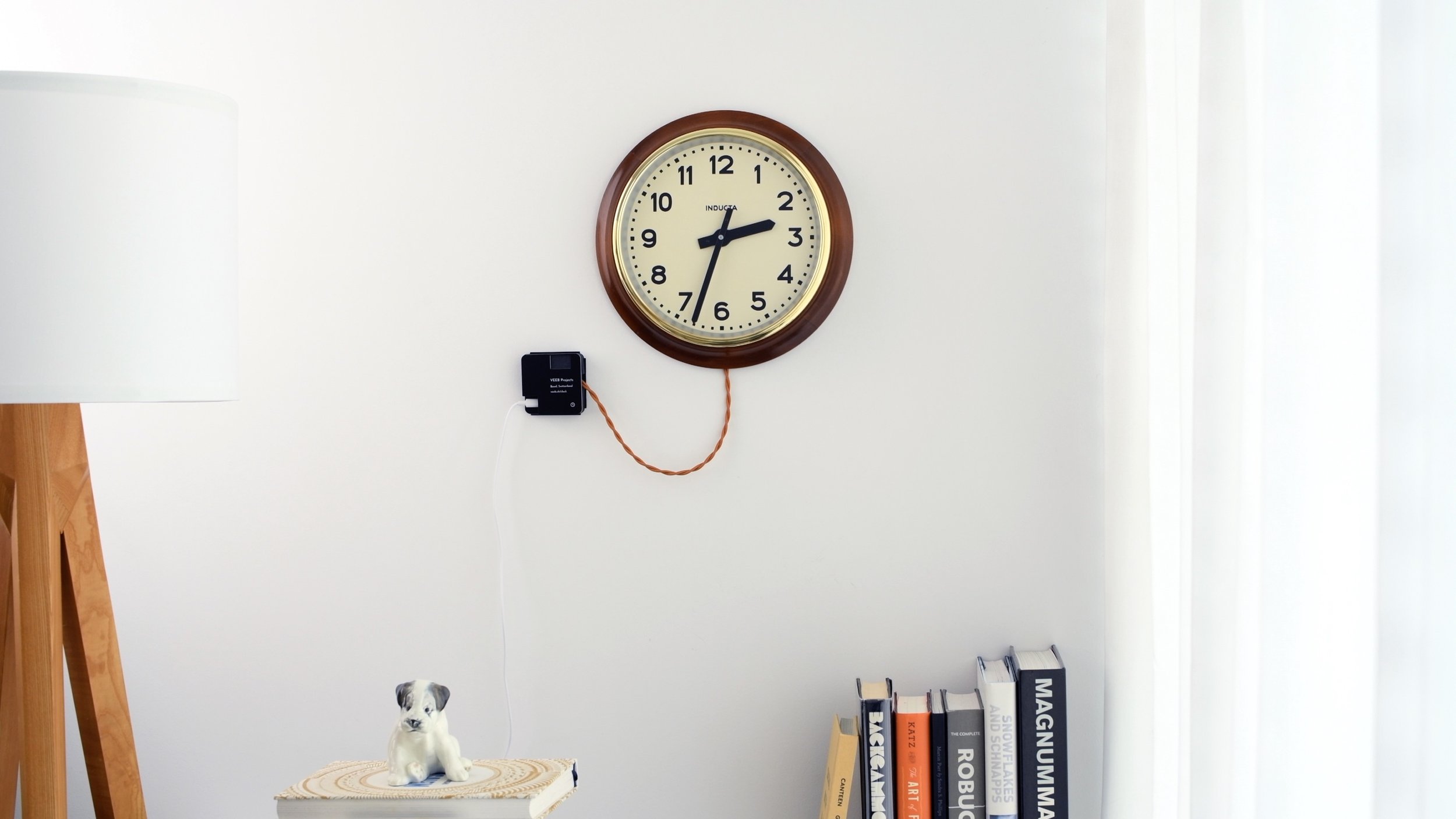
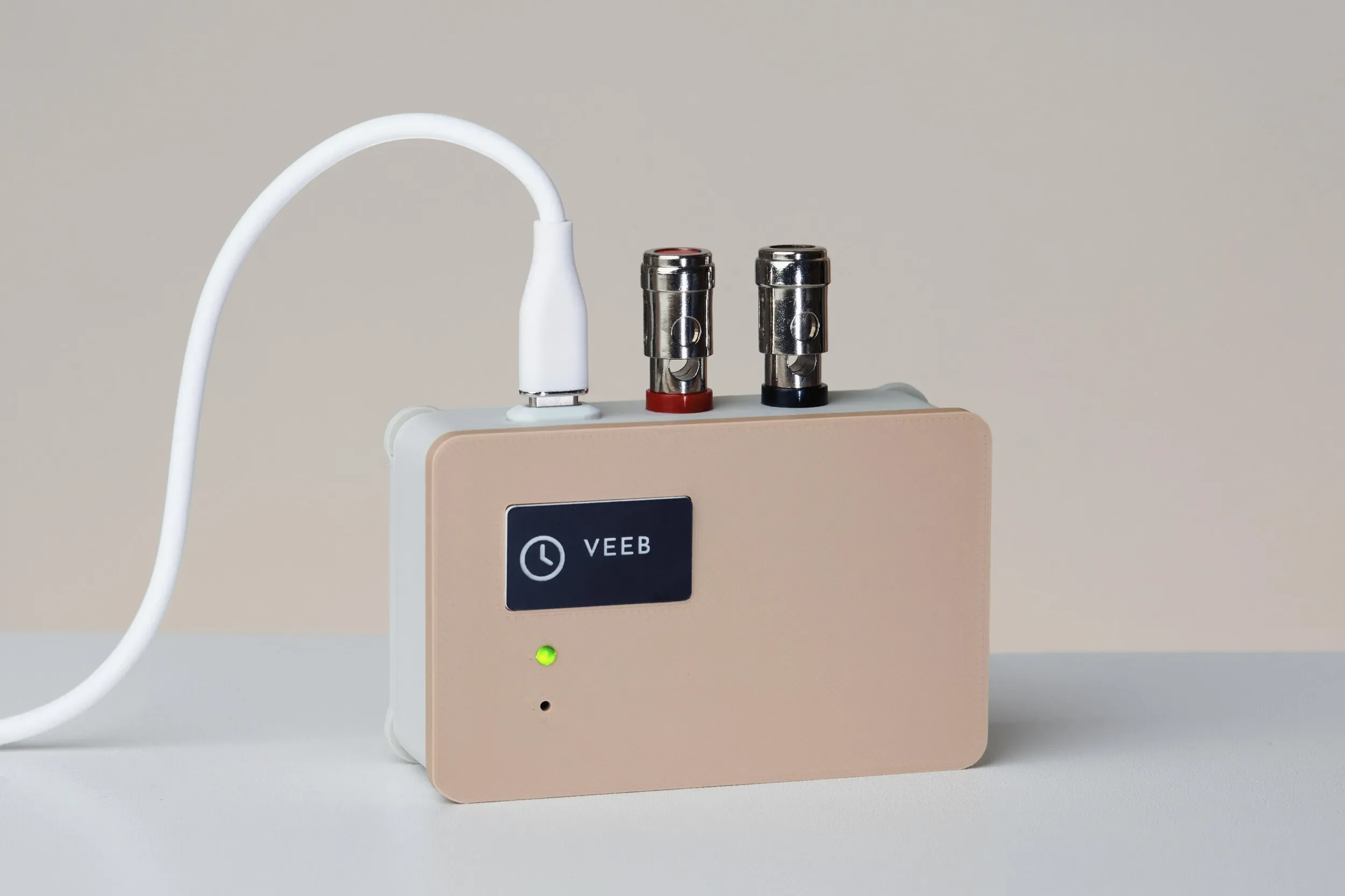
Pair it with the included VEEB Clock Driver: give it your wifi details once, no app, nothing to learn, and an 80-year-old mechanism keeps internet-accurate time from then on, entirely on its own.
This is a single vintage piece, not a reproduction, so once it's found a home there won't be another exactly like it.
Some clocks tell the time quietly, in the background. This one asks to be looked at first, and told the time second. Flurina is a FAVAG wall clock, built in the 1940s in Neuchâtel, Switzerland, when the company was still perfecting the electric clock systems it would later become known for. Silence, then once a minute, a single tick, the kind of sound a clock only makes when there's real mechanism behind it.
The tiered metal frame, clamshell opening, and brass hinge give it a distinctly industrial presence: heavier and more deliberate than a typical wall clock, built to be handled and opened, not just glanced at.
Pair it with the included VEEB Clock Driver: give it your wifi details once, no app, nothing to learn, and an 80-year-old mechanism keeps internet-accurate time from then on, entirely on its own.
This is a single vintage piece, not a reproduction, so once it's found a home there won't be another exactly like it.


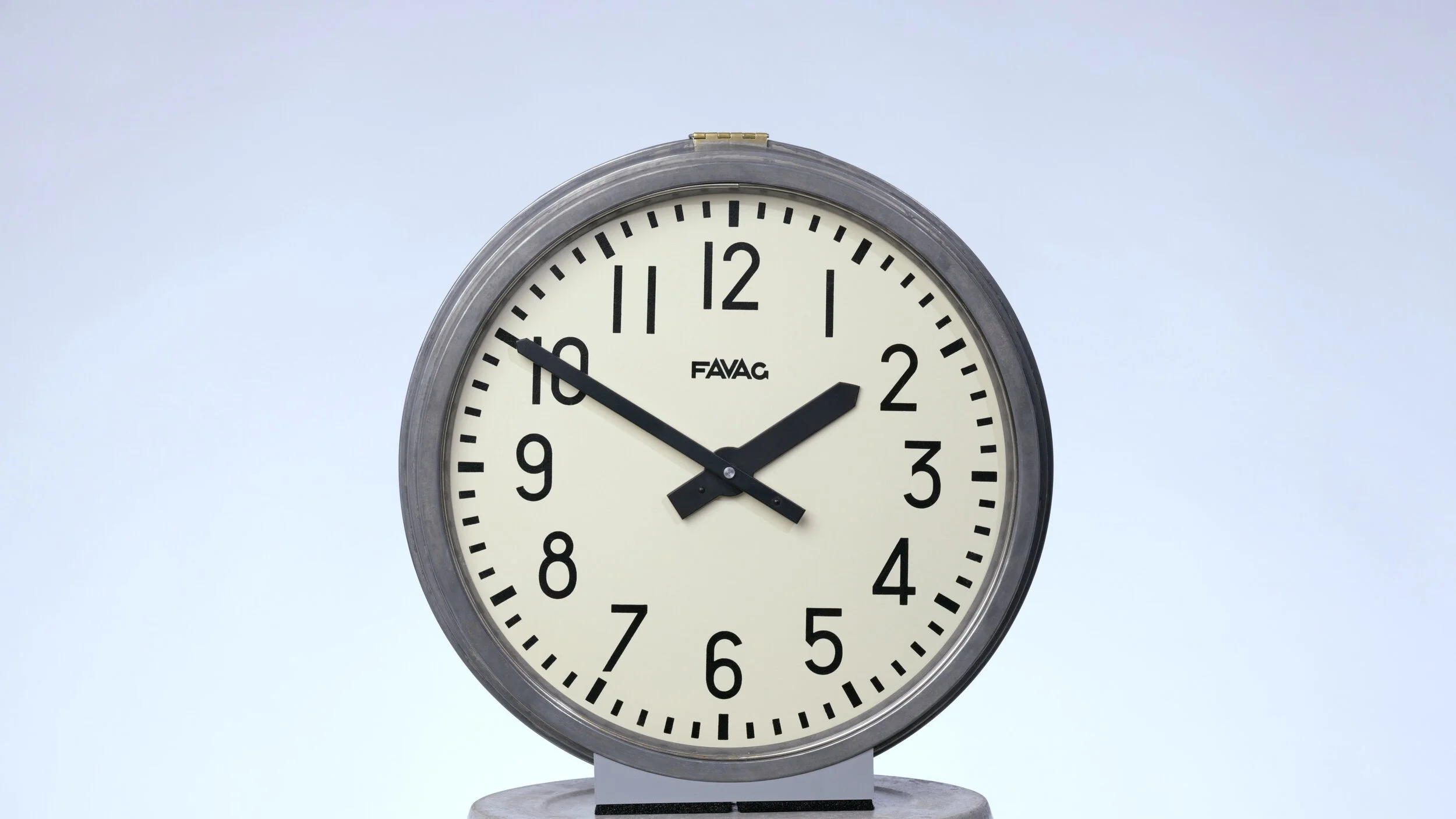 Image 1 of 3
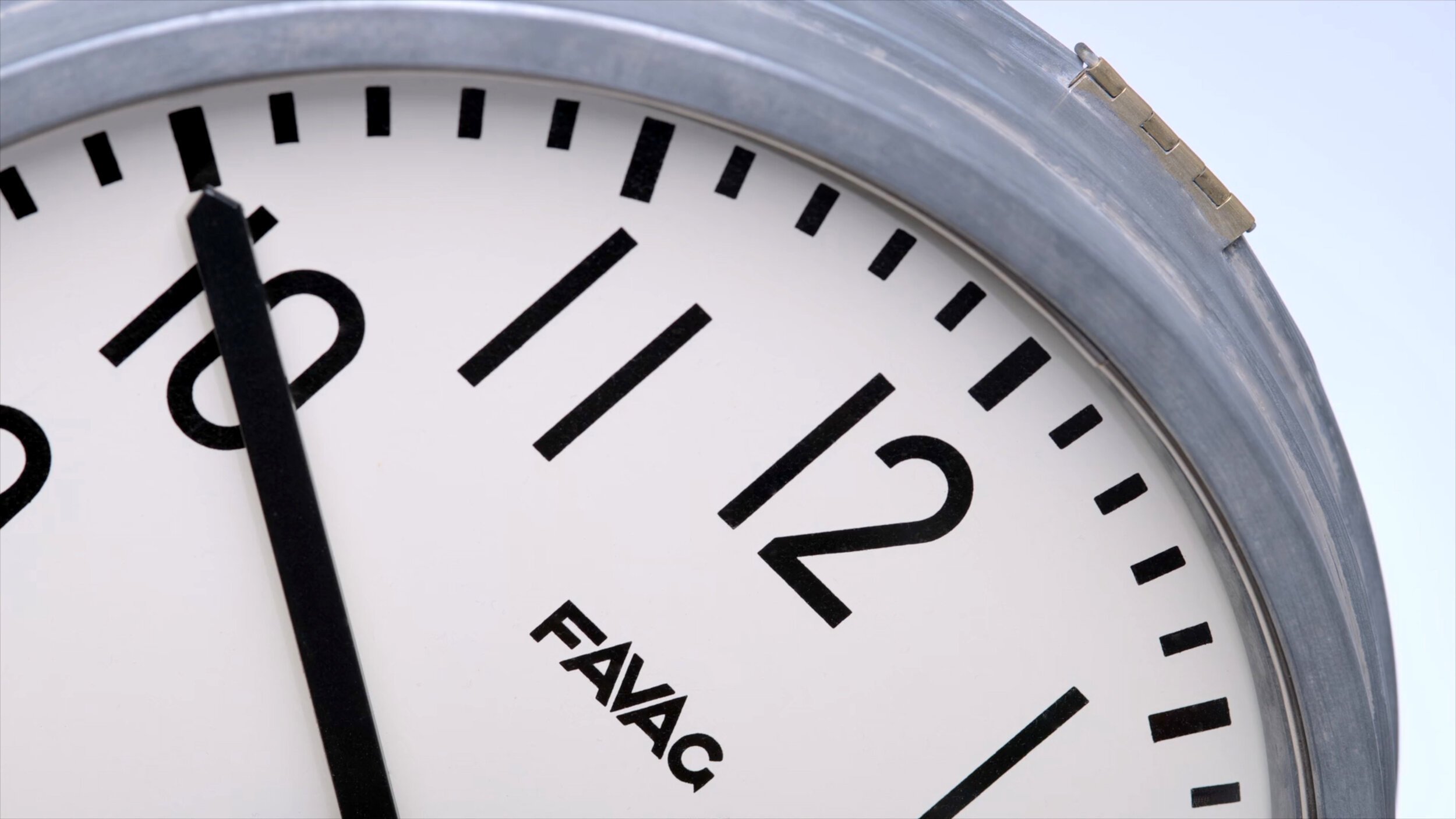 Image 2 of 3
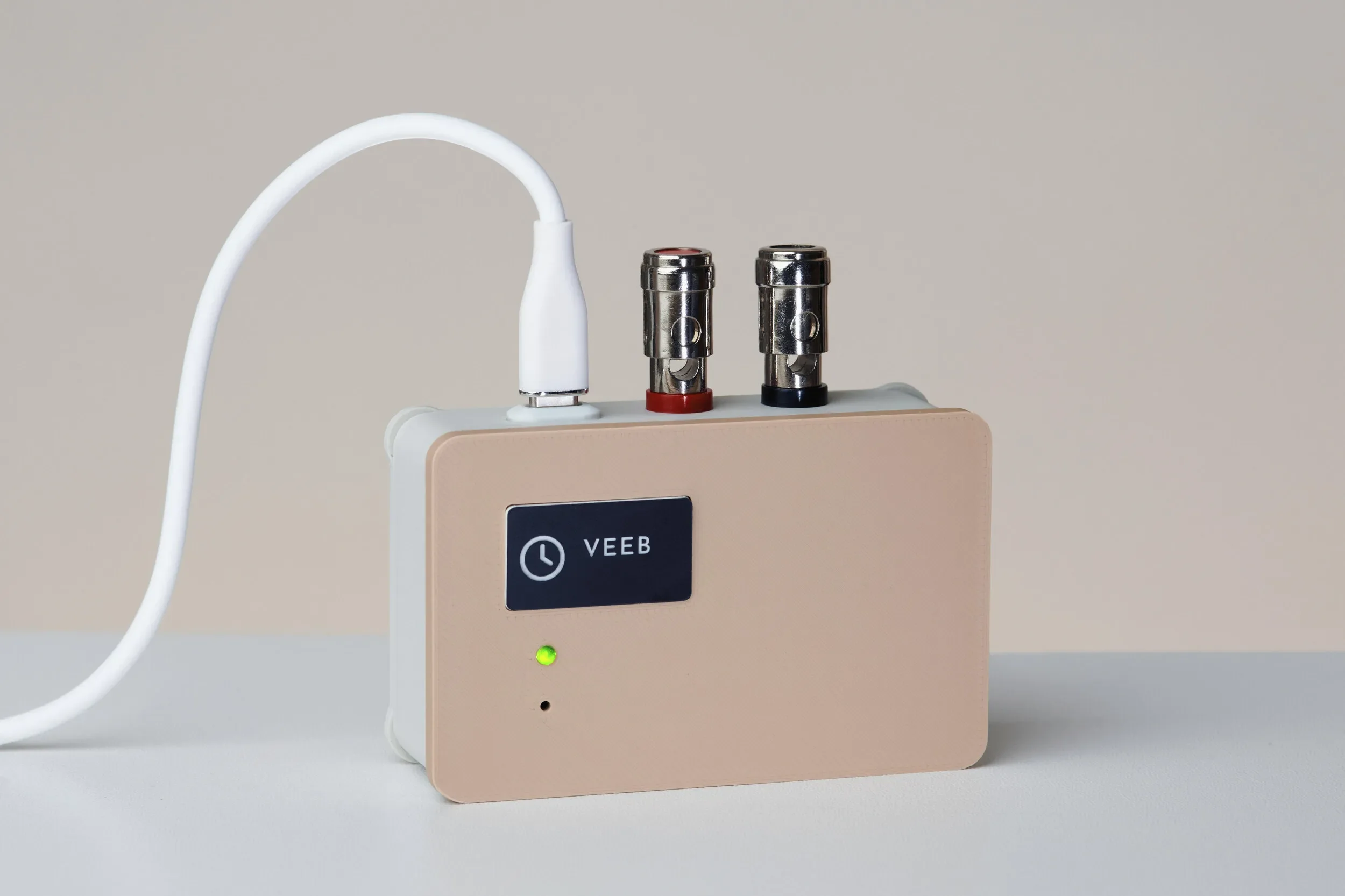 Image 3 of 3